
How Much of Ageing is Environmental and How Much is Genetic?
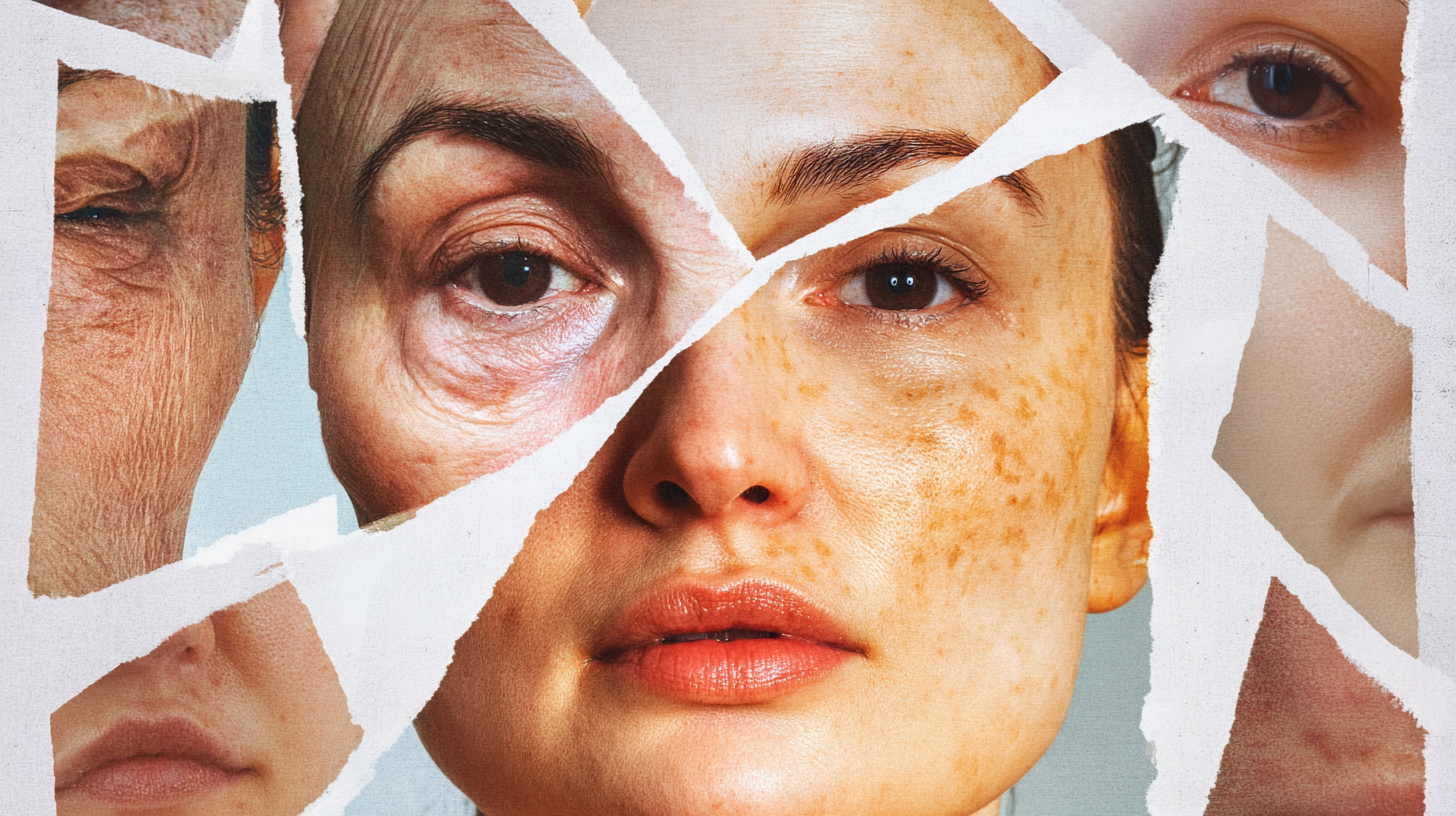
For years, ageing has been discussed as though it were a fixed inheritance, written into DNA and left to unfold. The science now paints a more complicated picture. Genes matter, certainly, but the pace and pattern of visible ageing, particularly in the skin, are also shaped by a lifetime of exposure. Sunlight, pollution, smoking, nutrition, stress, sleep, climate and social conditions all leave their mark. In dermatology, that cumulative burden has a name: the exposome.
This is why two patients of the same age can present so differently. One may show diffuse pigmentation, roughened texture and loss of luminosity in their early forties, while another appears comparatively resilient. Chronological age tells only part of the story. Intrinsic ageing refers to the biological process that unfolds with time, driven by genetics, hormonal change, cellular senescence and metabolic shifts. Extrinsic ageing, by contrast, reflects what happens when skin is repeatedly exposed to environmental and lifestyle stressors over decades.
That distinction is now supported by a growing body of wider ageing research. In a major 2025 Nature Medicine study led by Oxford Population Health using nearly 492,567 UK Biobank participants, environmental factors explained an additional 17 percentage points of variation in mortality risk beyond age and sex, while polygenic risk scores explained less than two percentage points. The researchers identified 25 independent environmental exposures linked to mortality and biological ageing, 23 of them modifiable. Smoking, physical activity, socioeconomic conditions and living environment emerged as some of the strongest drivers.
Skin biology reflects this same tension between inheritance and exposure. A 2021 systematic review and meta-analysis identified seven notable risk factors for skin ageing phenotypes: age, gender, ethnicity, air pollution, nutrition, smoking and sun exposure. That is a useful framework for clinic practice because it moves the conversation beyond the simplistic idea of “good genes” or “bad genes”. Genetic predisposition may set the baseline, but visible skin change is often the result of repeated environmental injury superimposed on that baseline over time.
Giselle Curcio, Chief Brand & Innovation Officer at AlumierMD, puts it plainly: “Modern living can influence how the skin functions and appears. Environmental exposure, lifestyle factors, and cumulative stress may affect the skin’s balance over time, sometimes contributing to dullness, uneven tone, reduced resilience, or increased sensitivity.” That observation will ring true for many practitioners, particularly those seeing younger patients present with concerns once associated with later decades. Pigmentation, fragile barrier function, delayed recovery, intermittent inflammation and redness often sit alongside the earliest signs of fine lines.
Curcio adds that “many clinicians report seeing patterns of concern that patients often describe as ‘modern skin ageing.’ These concerns may include visible pigmentation, textural changes, barrier impairment, and slower recovery following environmental stress. Some individuals also experience adult-onset breakouts or redness-prone skin alongside early visible lines.” In other words, visible ageing in clinic does not always arrive as a neat sequence of wrinkles and laxity. It can also show up as skin that is reactive, inconsistent and less able to recover from daily insult.
This is where the concept of the exposome becomes particularly useful. “While intrinsic ageing is driven by biological processes, extrinsic factors are widely recognised as contributing to visible skin changes,” says Curcio. “The term exposome, introduced in dermatological research, refers to the cumulative environmental exposures an individual encounters throughout life. These may include ultraviolet (UV) radiation, air pollution, climate factors, and certain lifestyle influences. Research suggests that these exposures can contribute to oxidative stress in the skin, which is associated with inflammation and structural changes over time.” The term was formalised in dermatology by researchers including Professor Jean Krutmann, whose work helped establish a framework for understanding skin ageing as the product of multiple overlapping exposures rather than sun damage alone.
Ultraviolet radiation remains the most important of those exposures. Reviews continue to cite evidence that up to 80% of visible facial ageing may be attributable to sun exposure and related environmental influences. That statistic has become central to how the industry discusses prevention because it reframes visible ageing as something that is, in substantial part, accumulated rather than simply inherited.
Yet UV is not the full story. Pollution has been linked to pigmentary changes and wrinkle formation. Smoking is well established as a contributor to premature skin ageing. Nutrition and wider lifestyle patterns also play a role, particularly through inflammatory load, barrier support and the skin’s ability to handle oxidative stress. Taken together, these factors help explain why visible ageing can progress unevenly and why the face often records lifestyle history with startling accuracy.
Curcio’s explanation of oxidative stress brings the mechanism into focus: “Oxidative stress occurs when reactive oxygen species (free radicals) exceed the skin’s natural antioxidant capacity. This imbalance has been linked in scientific literature to collagen degradation, impaired barrier function, and uneven pigmentation. Over time, these processes may contribute to the visible signs commonly associated with extrinsic ageing, such as loss of firmness, fine lines, rough texture, and discolouration.”
There is also a broader biological context. Ageing research now describes twelve hallmarks of ageing, including genomic instability, telomere attrition, epigenetic alterations, mitochondrial dysfunction, cellular senescence and chronic inflammation. These hallmarks provide the deeper scientific architecture behind what clinicians observe on the surface. Genes help shape this architecture, but environment influences how heavily and how quickly these processes are expressed.
So how much of ageing is environmental and how much is genetic? The most honest answer is that the balance depends on what is being measured. When looking at lifespan, disease risk and mortality in real populations, recent evidence suggests environment has the larger practical effect. When looking at intrinsic biological ageing, genetics still plays a substantial role. In skin, however, the visible signs that bring patients into clinic are often driven to a remarkable degree by exposure. As Curcio notes, “a frequently cited study by Krutmann et al. (Experimental Dermatology, 2017) suggests that environmental factors may account for a substantial proportion of visible skin ageing, although genetics and intrinsic ageing remain significant contributors. It has been suggested that up to 80% of exposome factors can contribute towards accelerated ageing.”
For the aesthetics sector, that should sharpen the conversation rather than simplify it. Ageing is neither a sentence handed down by genetics nor a matter of lifestyle alone. It is a dialogue between biology and exposure, written over time into the skin. That is precisely why prevention, barrier support, photoprotection and long-term skin health remain central to modern practice. Patients may arrive asking about lines or firmness, but the wider clinical picture is increasingly one of cumulative environmental burden. The challenge for practitioners is not simply to treat what ageing looks like, but to understand what has been driving it all along.






Once tights come back into circulation and the holiday suitcase is put away, the waxing appointment that seemed essential in June can start to look easy to postpone. Taking a break is entirely a matter of preference, but anyone who enjoys the results of regular waxing may find that their first appointment back in spring feels different from the ones they remember.