
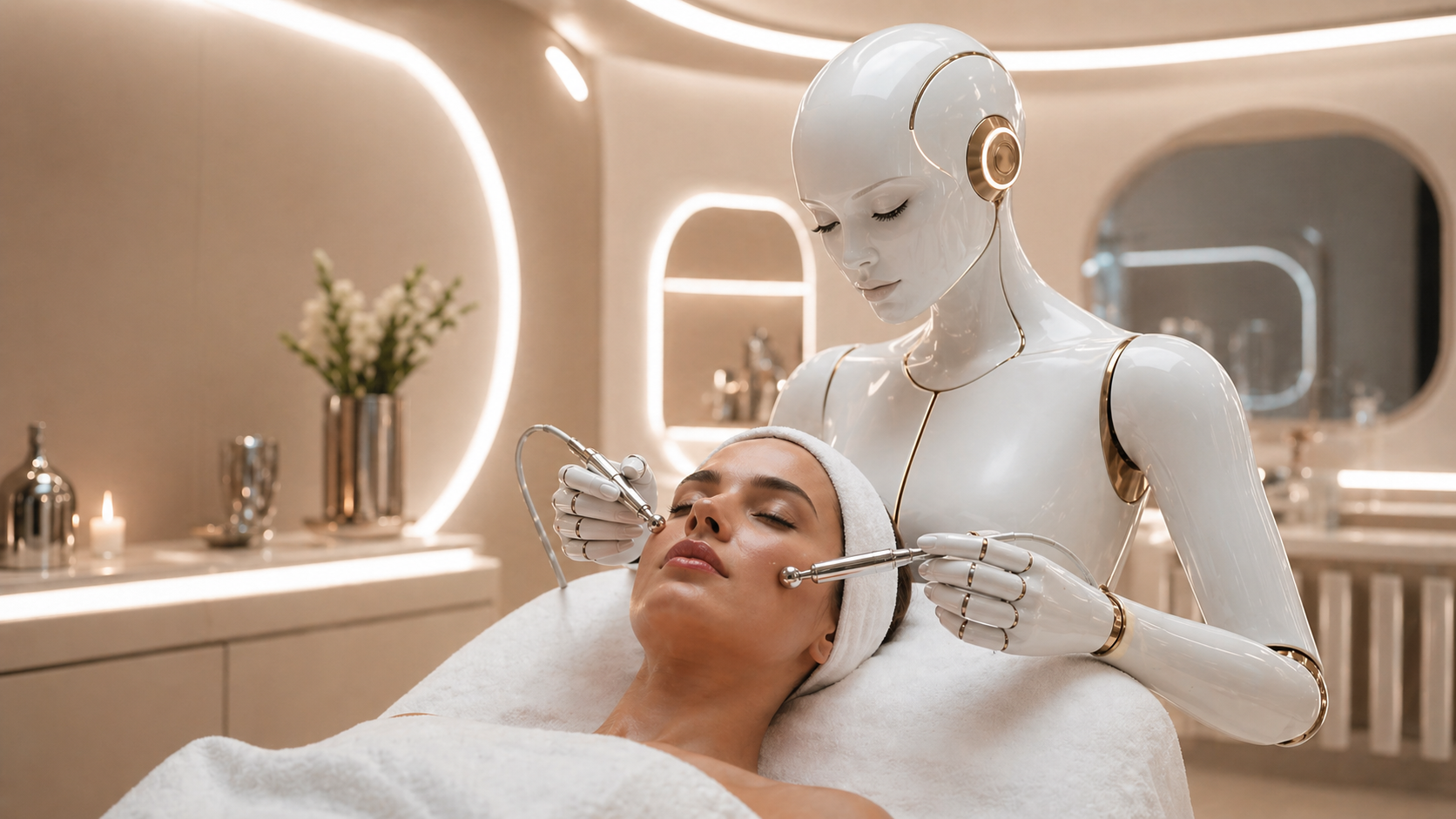
Clinics and salons are seeing more clients with sensitised skin and weakened barriers, and many of those clients now want long-term skin health rather than aggressive correction. That's pulling the professional skincare conversation in a new direction. Recovery and resilience are becoming the priority in treatment planning, and practitioners are under pressure to look past short-lived trends and produce results that genuinely hold up.
Our editor spoke with Janna Ronert, founder of IMAGE Skincare, licensed esthetician and chairwoman of the board, whose brand says it is used by more than 60,000 licensed estheticians across over 60 countries. Together we explored what has really changed in clinic demand, why sensitive skin is still so often misread, how professional skincare should work alongside in-clinic procedures, and what clinics need to focus on now to keep their skincare offering strong going into 2026.
PBL Magazine: In the UK, we've seen a big shift in skincare and treatment conversations towards skin health, longevity and inflammation management. Inflammation in particular has become a major topic. From your perspective, what has changed most in clinic demand over the past 12 to 18 months?
Janna Ronert: I think you're exactly right. There's been a shift away from really strong exfoliating treatments and very aggressive approaches, and more towards skin health and the longevity of the cell. That may not always give an immediate before-and-after result, but a better barrier, more hydration and better skin health create a cell that lives younger for longer.
There's also been a shift because there are now so many things people can use at home. Some are good, some are not so good, and some are a little hoaxy. On TikTok they may look like they work, but they really don't. If people are using the wrong ingredients at home alongside their treatments, that can do harm. So a lot of in-clinic treatments now also have to repair inflammation and barrier damage that's been created elsewhere. There's probably a big shift towards more recovery products that help the skin barrier look healthy again.
PBL: So you see it partly as a direct response to over-abrasive treatments and compromised skin barriers, meaning clinics now have to dial things back and focus on repair?
JR: I do. Anything in moderation is great. Microneedling is great with the right products, in the right setting and at the right depth. But more is not more. That's been a big shift. Less is really more. Doing something consistent, safe and healthy for the cell is where I think the industry is going.
PBL: You’ve just extended the Image Skincare Molecular Defense Range. Where does the Molecular Defense range sit within that wider move towards skin health, barrier support and longevity?
JR: The original Molecular Defense MD collection, which has now been extended with these new products, was really about exfoliation, retinols, niacinamide and vitamin C. But the three new products in this collection, especially the Barrier Repair Cream, are really about what happens post-treatment. The name says it all. How do you repair that barrier after a treatment?
If you're involved in advanced treatments, the goal is to get the skin back to its best health faster, sooner and more safely. That's really important. Our new Barrier Repair Cream is essential post-treatment, but the added benefit is that it has the seal from the National Eczema Association and the seal from the National Rosacea Association for daily use on rosacea and eczema-prone skin.
So it's a real trifecta product. It treats a lot of the concerns estheticians deal with, clinicians deal with and consumers deal with at home. We're excited because it doesn't just treat one thing.
PBL: Do you think the Barrier Repair Cream is the product most likely to resonate with clinics and patients?
JR: I do. I'm really excited to use that one. It's paired with a cleansing balm so you don't have to treat the skin harshly after a treatment in order to help it repair. It's like running a marathon and then not eating or drinking anything afterwards. That's not very healthy. If you've put the skin through a marathon, you need to be kind to it post-treatment. We're very excited about this extension to Molecular Defense.
PBL: What do you think the industry still gets wrong when it talks about, or treats, sensitive or compromised skin?
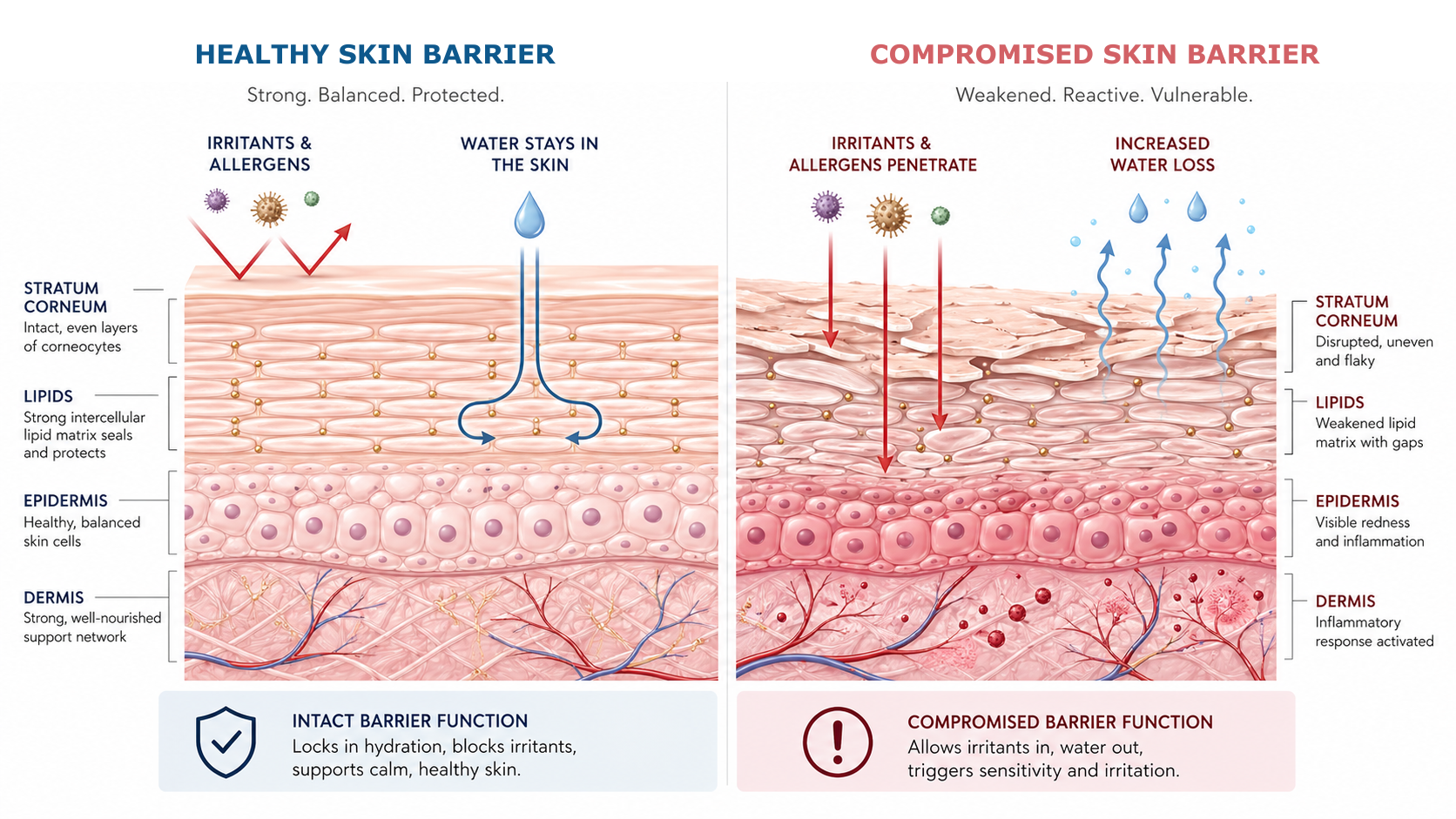
JR: I'm an esthetician and I've been in this business for 25 years. One of the biggest things the industry still gets wrong is over-simplifying what sensitive skin actually is. It's not just about avoiding ingredients. You really have to understand why the skin is compromised, and you can only do that by talking to people, looking at their skin, examining their skin under a Wood's lamp and under a microscope, and asking what they're doing every day, what they're eating, what their stress level is, what they're putting on their skin, and what they're not putting on their skin, including SPF.
There are so many things that go into sensitised skin. It isn't always just over-treatment or over-exfoliation. It can be the environment, haircare products, your sheets, stress, lifestyle. As someone who has rosacea myself, I think it's really about restoring balance, getting the skin to optimal health and strengthening that barrier.
PBL: Sometimes people will say "you've got sensitive skin", but that doesn't actually help target the issue or improve it.
JR: Exactly. What that really means is that you need to create stronger skin, create a healthier barrier, don't over-strip it, and don't forget that the skin is the largest organ in the body. That's the one you need to treat most carefully.
That's why you need a licensed esthetician, not a TikToker or an Instagrammer with a filter, telling you what to do. You need a true professional. That's where professional skincare comes in. You need a person to guide you and really understand your skin. So we're in a great business.
PBL: A lot of brands and clinics now use the term "longevity". In practical terms, what does it mean for clinics and practitioners?
JR: Longevity simply means maintaining healthy skin for a really long time, and that means starting earlier. You need to start early with a good skin health programme. You need to wear sunscreen every day, and at every stage. If you do that, you'll need less correction later and you'll have better skin health overall. That's what longevity is about. It's also about building simple programmes, and hopefully professionals can influence their clients' habits so they guide them in the right way.
PBL: I really like that, because it brings longevity back to healthy skin rather than just skin that looks good.
JR: Exactly. In America, we have this idea of a health pyramid: what you should eat, the proportion of proteins, vitamins, carbohydrates and vegetables. Skin works the same way. You need a healthy skin diet. I never suggest that one ingredient on its own, whether that's vitamin C, retinol or hyaluronic acid, is going to do everything. You need a balanced skin routine because the skin is a major organ and you have to feed it properly. You can't eat one banana a day and be healthy. You need balance. The same goes for skin.
There's always this quick-fix mentality. People think they can eat processed food or fast food and then supplement the rest. It doesn't work like that. You can't put bad fuel in your car and expect it to run beautifully. I'm a big fan of supplements, but for the right reasons. Wellness works hand in hand: good skincare, good supplements, good sleep, good friends, a good professional esthetician. It's all connected. It's lifestyle.
PBL: In the UK, aesthetic medicine is moving more towards skin quality. Fillers are becoming less dominant, surgery is only really desirable if it looks undetectable, and clients are investing instead in skin boosters, polynucleotides and lasers to improve skin quality. How is IMAGE Skincare responding to that growing overlap between in-clinic procedures and professional skincare?
JR: That's a very easy question, because since the day this company was founded, we've always had professional peels and professional treatments. That's always been our way of thinking. You do great homecare, and then you go to your personal trainer, which is your clinician. So this isn't new to us.
I agree with you that less is more. Less filler, less of all of that, and more of the newer wave, whether that's NAD boosters or other injectables. Laser is a great option for a very specific need, but as an anti-ageing or longevity approach it probably wouldn't be my personal treatment of choice for that purpose.
What I would say is that we work very well alongside all of these treatments. If you're doing microneedling, skin boosters or light therapy, you need a really good professional product to help drive that treatment to the level of the skin you want to reach. Are you working in the stratum corneum? The epidermis? The dermis? Are you looking for pinpoint bleeding? Are you trying to repair scars or pigmentation? We've always worked very well with those treatments, and now it's even more relevant.
PBL: So in a sense, everyone else is catching up with the IMAGE Skincare mentality, rather than IMAGE trying to catch up with anyone else?
JR: Exactly. We don't have to catch up because we've been doing peels and professional treatment support for more than 20 years. We're just making it better.
PBL: What do you think IMAGE understands about the realities of working in a treatment room that some other brands don't?
JR: Because I'm an esthetician and have that background, I understand what it means to be realistic about skincare, not only in terms of products and budget, but in terms of what people will actually do every day. If money were no object, what would they really do every day? What people say they'll do and what they actually do can be very different.
IMAGE has always understood the importance of consultation and the relationship clinics and estheticians have with patients. We understand consistency, and we understand the trust that has to exist in the treatment room. People can rely on what we say the products are going to do, and then the products actually do it.
A lot of brands miss that. If they don't have that clinical foundation, they miss the relationship side and they miss the real clinical data that underpins trust in those bottles.
PBL: Because once a therapist trusts your product, she'll recommend it constantly and build treatments around it, and that drives business as much as results.
JR: Exactly. You need clinically proven, real, peer-reviewed data that supports the products. Not just great marketing and great packaging. There's so much marketing now, but you don't become a 20-year overnight success. You don't become number one just because you've spent a lot of money on marketing. You earn that wrinkle by wrinkle, blemish by blemish, and through trust with thousands of customers around the globe. That takes time, patience, energy, persistence and constant innovation. That's what separates our brand from a lot of others in the industry.
PBL: When new products launch, or when there's a new wave in beauty, it tends to come from one of two places. Either there's a new active that everyone is talking about, or there's an older active that's been reformulated in response to what's happening around us, whether that's Ozempic, over-exfoliated skin, over-treated skin or increased sensitivity. Where do you think the next growth area in skincare will come from?
JR: I don't think it will come from any of those things. I think the next growth area is going to be in how we deliver actives into the skin, and at what level. That's where the next big shift will be.
We already have exosome technology that delivers ingredients in a time-released way, and I think we're going to be able to include more ingredients in that delivery system and wrap them in a more targeted way. It's almost like an Uber delivery system for the skin. Where do you want that active to go? To the dermis to build collagen? Then you build a delivery bubble that can signal and communicate with cells to get there.
Of course there are always new ingredients, but many of the key ingredients are already true and tried. We continue to get newer forms of vitamin C, some oil-soluble, some water-soluble. We get newer forms of retinol, some less irritating, some more complex, some designed not to create as much inflammation. So I think the growth area is in better formulas and better delivery systems, not necessarily in some completely new brilliant ingredient we've never seen before.
PBL: So reading between the lines, that sounds like something IMAGE is also working on, improving delivery systems to improve efficacy.
JR: Absolutely. In every collection: sunscreens, microbiome, longevity, acne, pigmentation. That's where the real discovery is coming. It's what separates a professional brand from a retail brand: true scientific research on how to get products deeper into the skin while supporting a longer life cycle for the cell.
PBL: Final question: if you were advising a clinic on how to future-proof its skincare offering for 2026, what three priorities would you tell them to focus on?
JR: The first one, which is probably the obvious one, is to partner with a company that provides great education and strong scientific clinical support, so you can prove your promise. If you say "age later", prove it. Show me.
The second is to keep the skincare offering very simple. Have you ever been to a fancy restaurant and they bring you a wine list that's enormous? How do you choose? Or even a menu that's too big? The same applies here. Keep it simple. There are really four main types of people who walk through your door: wrinkles, acne, pigmentation, and then sensitised, red, irritated, unhealthy skin. So target three or four core treatments that fill that gap.
The third is that clinics do need to integrate some of these newer modalities with great skincare products in the treatment room, but it depends on budget. A lot can still be achieved at a lower level. A good microdermabrasion, light microneedling and a good peel can still deliver a lot. If you then want to expand financially, you can move up to something like a Hydrafacial-type treatment or lasers. But even lower-level modalities can still deliver very pretty skin if the client is also using the right products at home every day.
I always say to clinics: if you're the personal trainer, and you do an amazing job in that hour or hour and a half, and then the client goes home and does nothing for the next 30 days, I'm not sure how good your results are going to be.
PBL: Consistency is king.
JR: It is. It's really about offering your clients the right take-home products that can deliver stunning results, because when you pair the two, you really can help the client age later. If you followed people who had consistently gone to the same clinic for one year, three years or five years, they would look different from their friends who'd gone for the quick hit, the quick surgery or the quick fix of fillers and then did nothing else. They don't look as healthy.
At the end of the day, it still comes back to relationships. You do business with people you like, people you trust and people who solve your problem. You have to solve your clients' problems, and that means talking to them, understanding what's changed each time you see them, and adjusting accordingly. That requires a human relationship. AI can't do that.
PBL: I don't think AI is coming for beauty therapists' jobs any time soon.
JR: I agree. In the US there are even machines that do body massage, and that horrifies me. There's no personal touch in that. AI is useful for scheduling or office admin, yes, but not for massaging me and not for doing my brows. I'd like a human.
PBL: I'd like a human too. I don't think that's going to change any time soon.
JR: I don't think so either. I'm happy about that.





Hydrafacial UK has promoted Justine Stephens-Parker to Senior Head of Sales for the UK and Ireland, with a remit to support the company’s continued expansion across both markets.