
The Rise of Tweakment Hotels as Experts Express Patient Safety Concerns
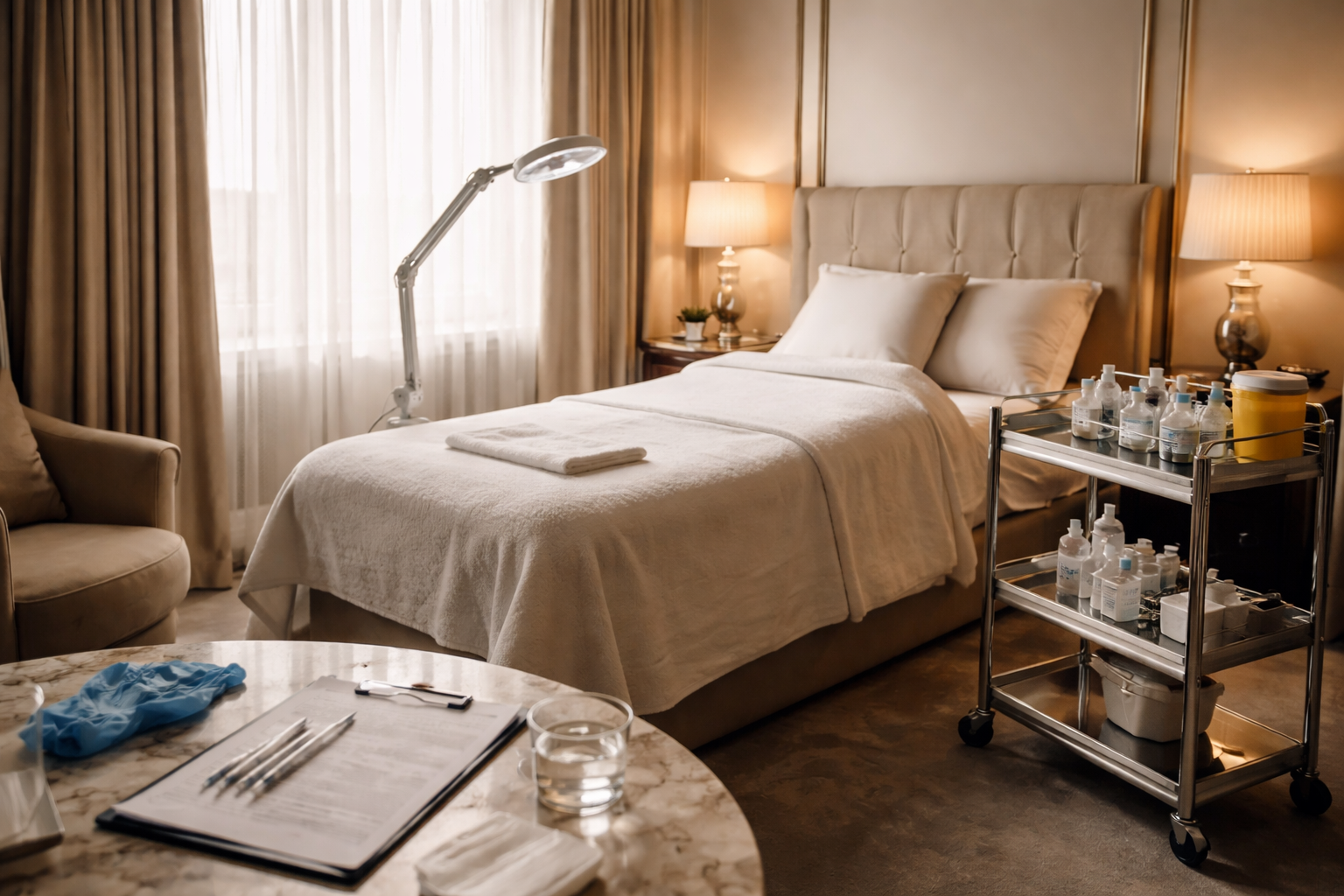
The rise of non-surgical cosmetic treatments has brought with it a new phrase, and one that says a great deal about where the sector now finds itself. In the UK, “tweakment hotels” is increasingly being used to describe temporary or hot-desk treatment spaces, often in prestigious locations, where practitioners can rent rooms by the hour and benefit from the credibility of the postcode without necessarily offering the standards patients may assume come with it.
Our editor first published an opinion piece on the loss of prestige of Harley Street back in 2024 and the conversation has resurfaced again. Complaints about unqualified practitioners carrying out procedures from temporary offices around Harley Street had risen from 18 to 118 over five years according to data from Save Face, and rooms are being rented for as little as £120 an hour. The Cosmetic Procedures Parliamentary report published in February went further, pointing to multiple reports of procedures taking place in Airbnbs, hotel rooms, garden sheds and public toilets, and warning that regulation has failed to keep pace with the rapid expansion of the non-surgical sector.
The Women and Equalities Committee said the Department of Health and Social Care estimates that 900,000 Botox injections are carried out in the UK each year. The government has also acknowledged that non-surgical cosmetic procedures have become more accessible, more varied and more widely marketed. But ministers were equally clear in their 2025 consultation response that the current landscape remains fragmented and does not offer a robust system to protect the public from harm.
That anxiety is echoed by Dr Sabika Karim, founder of Skin Medical, who says: “Historically London’s Harley Street has been known as a centre of excellence for private medicine, but disappointingly its reputation has been declining for many years which is further impacted by the growing number of unqualified people setting up so-called ‘tweakment hotels’ in this area.” She adds: “As a doctor who has over two decades of experience in the industry, I am seeing more and more claims online about treatments and experts offering quick fixes which are, quite frankly, too good to be true and often dangerous.”
The parliamentary committee has also pointed to a rise in adverse outcomes, including the case of 28 people in the north-east of England who were left with potentially fatal botulism after anti-wrinkle injections in June 2025. Save Face told MPs it has helped more than 15,000 members of the public since 2014 with unwanted outcomes, adverse reactions and complications linked to non-surgical cosmetic procedures. Published NHS guidance has also been clear that people considering cosmetic treatment should avoid mobile services where procedures are performed in private homes or hotels.
Karim says the issue is not confined to one postcode. “This isn’t just a problem on London’s Harley Street, it’s an issue that’s impacting all towns and cities across the country in which people without the necessary medical training and experience are practising invasive procedures. In doing so there is a risk of infection, blindness, skin necrosis, permanent scarring and even death.” She adds that it is “a problem which needs to be addressed with the utmost urgency in order to keep people safe.”
The regulatory response is beginning to tighten, but it remains incomplete. The government’s consultation response, published in August 2025, said practitioners and premises carrying out specified procedures in England will need to be licensed under a future scheme, with the highest-risk treatments facing tighter control. Since 1 June 2025, the Nursing and Midwifery Council has also required nurse and midwife prescribers to see patients face to face before issuing prescriptions for non-surgical cosmetic medicines, saying inconsistent regulation in the sector presents risks to the public.
For practitioners the patient risks are paramount, Nina Prisk, founder of Update Aesthetics, says: “When it comes to Tweakment Hotels, the main focus for me is always patient safety and clinical integrity. With over 14 years as a Registered Nurse and Independent Prescriber, I know how vital it is that treatments, especially those using devices, are carried out under the right protocols, with fully trained staff and proper oversight. Anything less puts patients at real risk.” She adds: “I see patients regularly who have had quick-fix treatments in settings that don’t meet medical standards. Even minor procedures can go wrong without careful assessment and knowledge of techniques and complications. Infection, scarring, and unintended results are very real possibilities when clinical governance is ignored.”
The language around tweakments can make them sound light, routine and low stakes. That, in itself, is part of the problem. What is often marketed as convenience can involve prescription medicines, invasive techniques and genuine medical risk. As Prisk puts it, “Convenience should never come at the cost of expertise or patient care.” Until licensing, enforcement and public understanding catch up with the market, the rise of tweakment hotels looks less like a lifestyle trend and more like a patient safety warning.






Katie Hughes-Dawkins writes candidly about the pressures and rewards of leadership in aesthetics, drawing on two decades of experience building teams and running businesses. From hiring the right people to accepting that you won’t always be liked, she shares the lessons that have shaped her approach, including why kindness matters and when it’s time to put your own wellbeing first.