
The Chemistry Behind Rising Gel Allergies
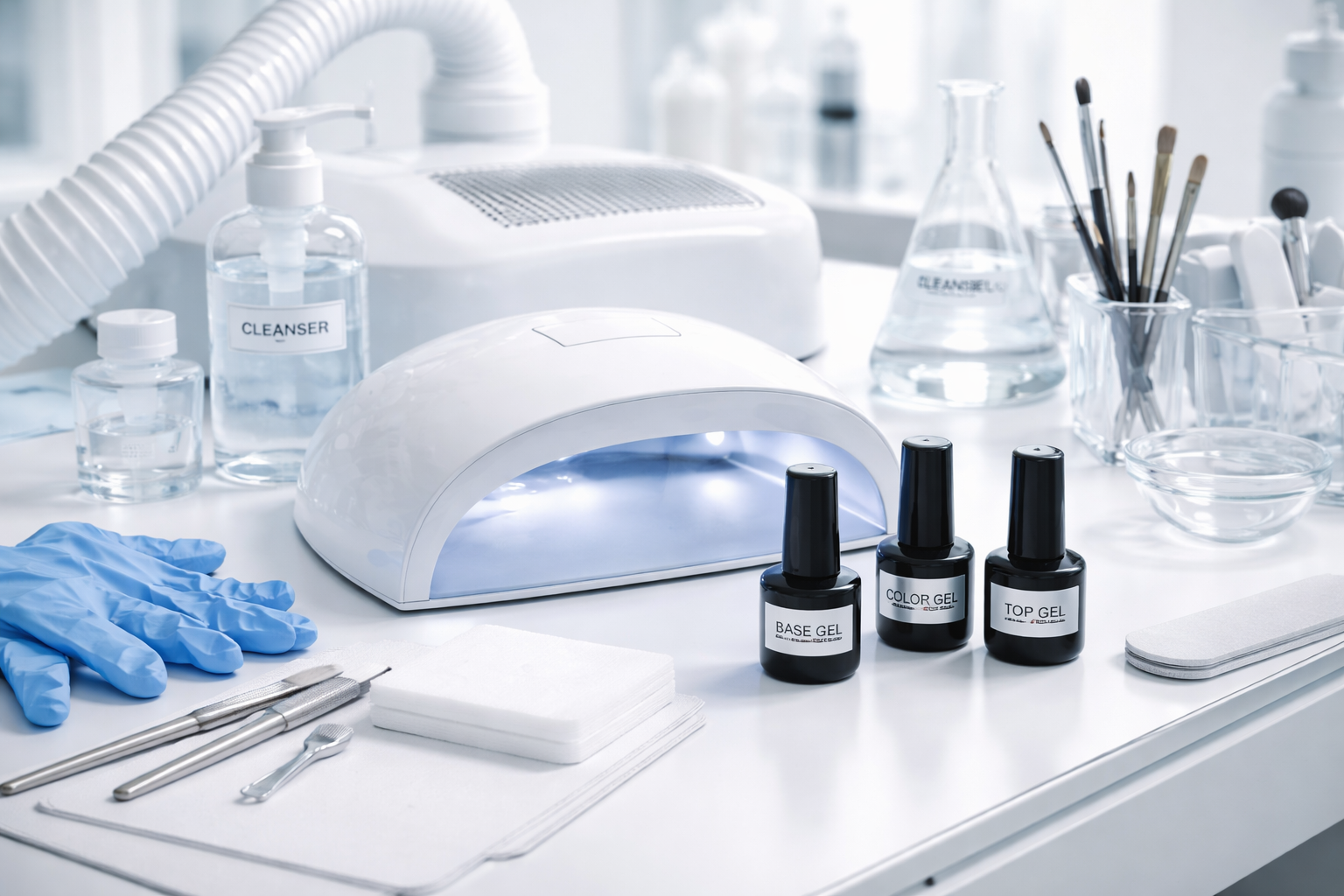
Gel allergy is often framed as a trend problem, driven by social media, DIY misuse or poor training. In reality, it is a chemistry problem first. Modern gel systems rely on reactive ingredients that are highly effective when used correctly, but far less forgiving when technique slips. For nail professionals, that distinction matters. Rising allergy rates are not simply about one ingredient or one bad set of nails. They are about what happens when reactive chemistry meets skin exposure, poor curing and inconsistent system use.
Acrylates and methacrylates
At the centre of the issue are acrylates and methacrylates, the family of chemicals used to create durable artificial nail coatings. These substances begin in a liquid or gel-like form and harden through polymerisation, a chemical reaction triggered by exposure to the correct light source. Once properly cured, the finished coating becomes stable and durable. The problem lies in what happens before that reaction is complete, or when product ends up where it should never be in the first place.
HEMA
HEMA has become the ingredient most associated with the conversation and it is now widely recognised across the sector and often appears in salon and consumer discussions as a shorthand for gel allergy more broadly. But HEMA is only one part of a bigger story. The wider concern is exposure to unreacted methacrylates, whether that comes from HEMA itself or from other similar monomers used in professional nail systems. A product labelled HEMA-free is not automatically risk-free. If the chemistry remains reactive and the system is not handled correctly, sensitisation can still happen.
That is why the real dividing line is not simply whether a product contains HEMA, but whether the reactive ingredients have been fully polymerised and kept off the skin throughout the service. Correctly cured product confined to the nail plate presents a very different risk profile from uncured or partially cured material touching the cuticle, sidewalls or surrounding skin. In day-to-day salon practice, that distinction can be easy to lose sight of because a product may look hard on the surface long before the curing process is fully complete throughout the coating.
Curing
Incomplete curing is one of the most important and most misunderstood parts of the allergy conversation. A set can appear glossy, solid and professionally finished while still containing residual uncured material. If polymerisation is incomplete, unreacted monomers remain in the product and those are the substances most likely to drive allergic sensitisation. Although a manicure can look successful, cosmetically it can still carrying a hidden chemical risk.
There are several ways this can happen. Applying product too thickly is one. Deeply pigmented shades, builder systems and certain high-viscosity gels may not cure evenly if they are applied beyond the system’s intended thickness. Rushing layers is another. Flash-curing does not replace a full cure, and curing one product as though it behaves like another can create a false sense of security. The biggest issue, however, is often lamp compatibility.
Gel systems do not cure under just any lamp; they cure when the photoinitiators within the formula receive the right wavelength and enough energy for long enough to drive the reaction properly. Using a lamp from another brand, substituting a cheaper unit, or assuming all LED lamps perform the same job can interfere with proper polymerisation. This is one of the reasons dermatologists and safety bodies continue to warn that the wrong lamp can increase allergy risk. A mismatch between formula and lamp can result in a product that looks set but is not fully cured.
The same applies to ageing lamps, inconsistent output, poor maintenance and guesswork over cure times. If the system has not been tested to work together, the professional cannot safely assume that full cure is taking place.
Skin exposure
Skin exposure is the second major part of the problem. Flooding the cuticle is the most obvious example, but it is far from the only one. Uncured product can be transferred from brushes, bottle necks, desk surfaces, gloves, wipes and lamp interiors. Product residue may end up on the fingertips during refining or removal, or on the opposite hand during service. Clients may also touch the face, eyelids or neck with nails that still carry uncured residue. This helps explain why allergic reactions linked to nail products do not always present only around the nails. In some cases, dermatitis appears elsewhere and the nail service is not initially recognised as the cause.
For professionals themselves, repeated occupational exposure adds another layer. Nail techs are not just working with a finished manicure. They are repeatedly handling reactive chemicals, filing cured and semi-cured product, and working in environments where dust and residue can build up. Over time, repeated low-level exposure matters. This is why allergy prevention in nails is not simply about neat application on the client. It is also about workstation hygiene, dust control, glove choice, handling technique and strict avoidance of skin contact throughout the working day.
In the UK market, HEMA and Di-HEMA are restricted to professional-use nail products rather than general home use. That reflects the fact that these ingredients require controlled handling, correct curing and application that avoids skin contact. The regulatory direction is clear even where public understanding is not. These products are not intended to be treated casually.



From digestive health to the changes that accompany menopause, food has an important part to play in how we feel. Registered dietitian Laura Tilt explains what eating for your health can realistically achieve, and how to make the advice work beyond the shopping list.