
The Difference Between Getting a Face Lift in Your 50s and 70s in Practice
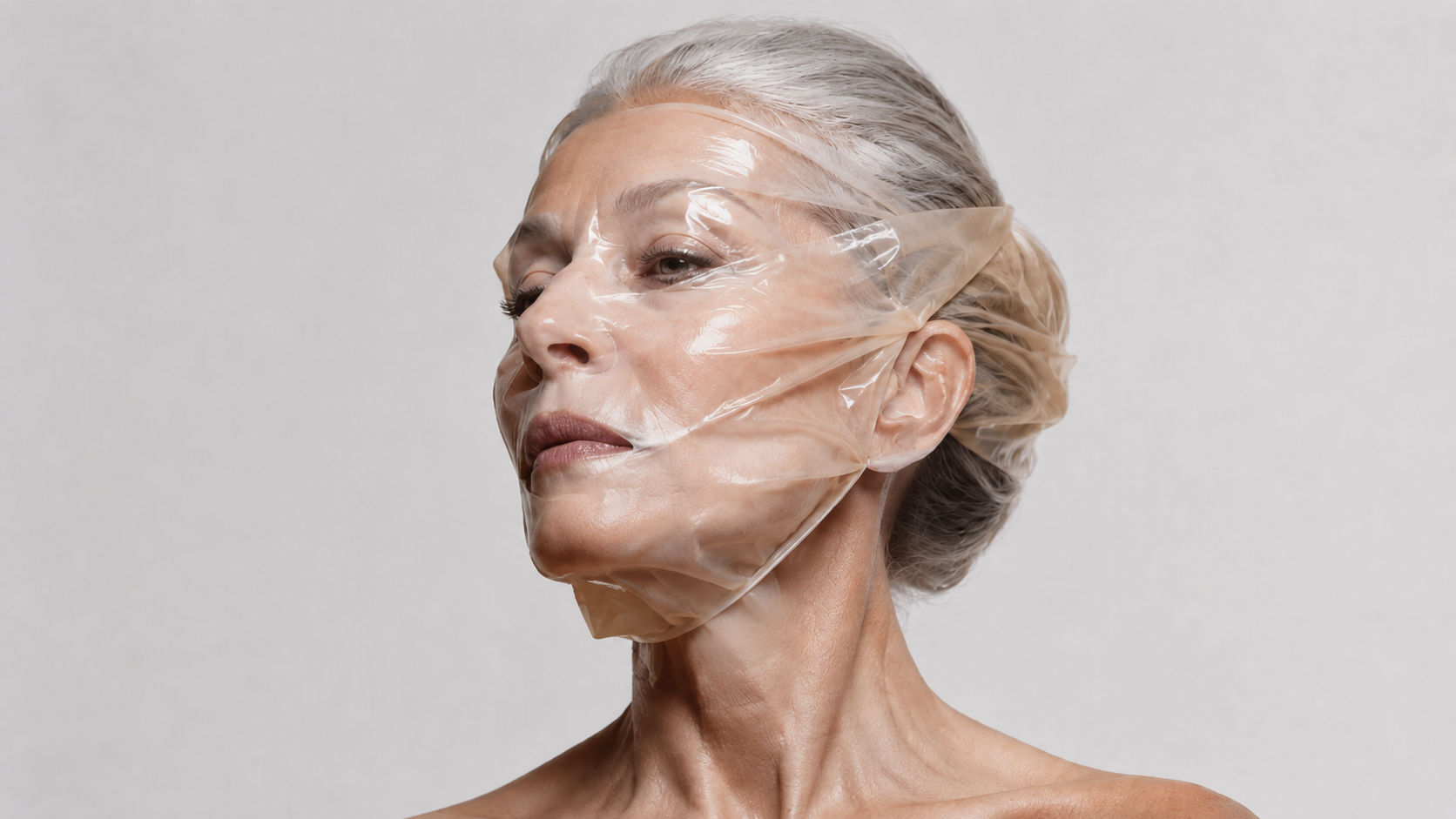
Face and neck lifts climbed 8% in the UK across 2024, with 1,882 procedures recorded by BAAPS-member surgeons. The number sits in the top ten by volume, alongside rhinoplasty and fat transfer. American Society of Plastic Surgeons data puts patients aged 55 to 69 at 59% of facelift cases for the same year, with the over-70s at another 20% and the 40 to 54 bracket at 18%. Gen X is arriving earlier than the Boomers did, but older patients are still presenting in considerable numbers.
While surgeries range across the lifecycle for patients, it’s important to consider what the surgery actually involves at different stages of life, and what that means for the post-surgical work you will be doing with these clients in the months and years afterward. A facelift on a 52-year-old and a facelift on a 72-year-old can sound the same in the consultation room but look very different in theatre.
The age question
There isn't a universal "right age" for a facelift, but there is a window where the trade-off between tissue laxity and tissue strength works most in the patient's favour. "The late 40s to mid-50s is the sweet spot," Mr Tulley said. "Tissue quality is still good, there is enough laxity to correct but enough elasticity and tissue strength to hold the result, and patients at this stage can expect not to revisit surgery for a decade or more."
For some patients, surgery can begin slightly earlier. A short scar facelift in the early to mid-40s can address early movement in the cheeks and midface while the neck still sits in good position. "This should last at least 10 years, after which a face-necklift can be performed as the neck changes become more significant, along with further descent of the facial tissues," Mr Tulley said.
The wider trend towards earlier surgery fits this logic. AAFPRS data shows patients aged 35 to 55 rising from 26% to 32% of reported facelifts in recent years, with 67% of members agreeing their average patient age is getting younger. In mainstream practice, this shift has less to do with 28-year-olds asking for traditional lifts than with Gen X coming in earlier than the Boomers did, often hoping to get ahead of more significant change later.
Beneath the surface
Two decades changes more than how much has dropped. The behaviour of the underlying layers shifts as well.
At 50, the superficial musculoaponeurotic system (the SMAS) has begun to descend, taking the deep fat compartments and the malar fat pad with it. Skin elasticity has declined but tissue strength remains workable. Bone resorption has started, although the underlying facial skeleton still offers reasonable structural support. The face shape has begun moving from heart-shaped toward squared, with jowls and nasolabial folds starting to show.
At 70, the same trajectory has continued for two further decades. Bone resorption is more pronounced, particularly at the orbital rim, the maxilla and the mandible. Facial fat compartments have descended and also atrophied. Dermal thinning is significant. The retaining ligaments that anchor the soft tissues to bone have weakened. Neck banding, submental fullness and loss of the cervicomental angle have often become the most visually ageing features. There is more descent to correct in the older face. The tissue is thinner and less forgiving. Volume loss has also reached a point where lifting alone will not solve it.
Choice of technique
For Mr Tulley, the deep plane facelift is the procedure of choice in both age groups, although what it can achieve on its own and what needs to be combined with it changes substantially.
"My preference across both age groups is the deep plane facelift," Mr Tulley said. "It addresses the structural cause of ageing, the descent of the SMAS and deep fat compartments, rather than simply redistributing skin under tension, which is what gives patients that pulled look they rightly fear."
The technique works beneath the SMAS, releasing the facial retaining ligaments and lifting the deeper structures as a single unit. US clinical research puts average longevity at around 12 years when surgery addresses the SMAS rather than relying on skin tension. The older skin-only lifts that produced the wind-tunnel look patients still fear are largely a thing of the past in modern practice.
The application differs by age. "At 50 the face and neck tissues are both usually addressed, resuspending the cheeks and midface, and correcting the jowls, jawline and nasolabial folds," Mr Tulley said. At this stage a face-necklift, often paired with upper eyelid blepharoplasty, will be enough for many patients.
By 70 the operation expands. "The face and neck tissues have descended further, more correction is needed and the skin resection is greater," Mr Tulley said. Additional procedures are more often built into the same operation, with upper and lower blepharoplasty, brow lift and deeper neck work sometimes added on the day.
Age alone does not rule a patient out. "Provided the patient remains medically fit, doesn't have significant cardiovascular issues, use blood thinners or smoke or vape, patients at 70 are usually still suitable for these procedures," Mr Tulley said. The selection criteria are medical, not chronological.
The volume question at 70
Volume loss is the point where the two operations diverge most clearly; lifting can only redistribute what is already there. By 70, there is often so little left to redistribute that resuspension on its own leaves the patient looking lifted but hollow.
"Volume loss is more significant and significant fat grafting is often used to address this," Mr Tulley said. The harvested fat goes back into the depleted compartments: midface, temples, periorbital area, sometimes the jawline. Contour is the obvious benefit. The less obvious one is what the fat does to the skin itself. "The stem cells in the fat also enhance the quality of the overlying skin, which has usually thinned significantly by this stage," Mr Tulley said.
Most patients arrive understanding that a facelift lifts. Fewer understand that on an older face, the lift only gets you partway. The grafting work is what restores what time has taken away. For practitioners advising clients in their late 60s and 70s, this is worth holding onto: at this age, the lift is only half the operation.
Neck work
Some neck correction is usually needed at 50, but by 70 it has frequently become the headline concern. Patients describe their jawline merging into their neck, with platysmal banding and submental fullness sitting on top.
"In older patients the neck changes become more significant, requiring a greater degree of resuspension," Mr Tulley said. "Additional neck correction including platysmaplasty, the correction of the neck from the front in addition to resuspension from the sides, may often be used to enhance the results in many cases."
In practical terms, neck work in the older patient is rarely a finishing touch. It is often the structural anchor of the operation, with the lift component doing the supporting work. At 50, the priorities usually run the other way around.
Holding the result
Longevity is where the conversation with older patients needs the most care. Facelifts performed at more mature ages can still produce very successful results, though in a small number of cases they soften earlier than they would in a younger patient. The reason sits in the dermis.
"Older patients may not initially understand that they lose significant skin quality, tone and strength with age, and it is therefore more difficult to hold the full results and definition quite as well as in a patient 10 to 15 years younger," Mr Tulley said.
None of this argues against operating on older patients. It does mean the consultation has to be more frank about what holds and what does not. BAAPS data puts typical facelift longevity at five to ten years. Full face and neck lift costs in the UK start at around £15,000, with most patients paying between £20,000 and £40,000. At 50 the result tends to sit at the upper end of that range. At 70 it can sit closer to the lower end, with revision work or supportive treatments occasionally needed to maintain definition.
Tissues can be adjusted or retightened if definition softens. Revision of this kind reflects how older tissues behave rather than any failure of the original operation.
The supporting treatment plan
The supporting treatment plan around a facelift differs by age, and it differs in ways that matter to practitioners. Older patients tend to benefit from layered post-surgical work, with laser resurfacing, injectables and medical-grade skincare each playing a part in extending the result.
A 50-year-old patient may need very little beyond ordinary maintenance. The 70-year-old usually needs more support. Resurfacing softens textural concerns the lift will not touch. Retinoids and growth factor serums help compensate for dermal remodelling that has slowed down. There may also be a case for conservative injectables to fine-tune areas where surgical volume restoration hasn't quite landed.
Timing and judgement matter here. Active resurfacing and other aggressive modalities should wait until healing has finished, which is usually a minimum of three months and often longer in older patients whose tissues take their time. Lower-impact services such as facials, dermaplaning, brows and lashes generally resume earlier. The timeline should come from the patient's surgeon rather than from a generic protocol.
What does not change with age, in Mr Tulley's view, is what the surgery is trying to achieve. "The aesthetic goals will generally be similar between the 2 age groups in that we are aiming to resuspend the face and neck tissues back to where they were when the patient was younger, creating more volume and convexity in the cheeks and upper face in contrast with a slimmer, more defined lower face, jawline and neck," he said. "In the older patient the extent of surgery required to achieve this is generally greater and will require additional steps if a full correction is what the patient desires."





From digestive health to the changes that accompany menopause, food has an important part to play in how we feel. Registered dietitian Laura Tilt explains what eating for your health can realistically achieve, and how to make the advice work beyond the shopping list.