
Neuro-aesthetics and Why “Looking Better” is Only Half the Mechanism

Neuroaesthetics is the scientific study of how the nervous system produces aesthetic experience: how we perceive, evaluate and feel pleasure (or aversion) when we look at faces, bodies, products, interiors, images and art. In the academic literature, it sits inside cognitive neuroscience and empirical aesthetics, with a consistent finding that there is no single “beauty centre”. Instead, aesthetic judgement emerges from a distributed network that integrates what the eyes and skin register, what reward and emotion circuits assign as value, and what memory and meaning systems contribute from culture and personal identity.
So what does this mean for professionals? A treatment outcome is never received by the client as a purely optical measurement. It is received as a brain state. That brain state is shaped by sensory input (visual and tactile), expectation and reward learning, and the stories a person tells themselves about who they are and how they want to be seen.
What the brain is doing when it calls something beautiful
Neuroimaging work consistently links subjective beauty to activity in valuation and reward circuitry, particularly medial orbitofrontal cortex (mOFC). Kawabata and Zeki’s classic fMRI study found the OFC differentiated “beautiful” from “ugly” judgements across categories of paintings, supporting the idea that sensory processing feeds into a valuation hub. A later meta-analysis that compared beauty appreciation for faces and for visual art reported mOFC as a shared site across domains, while also reinforcing that the wider network differs depending on whether the stimulus is a face, a scene, an abstract work, or something emotionally charged.
Faces are a special case in aesthetics because they are not neutral objects. They are socially consequential stimuli with dedicated perceptual circuitry, and studies of facial attractiveness show engagement of reward-related regions including OFC and ventral striatum, alongside areas involved in social and emotional salience. In other words, when a client assesses their own face post-treatment, their brain is not only “seeing” changes. It is running a fast, social prediction model: am I healthier, younger, more rested, more credible, more like myself, more like the version of me I am aiming at.
One useful organising frame for practitioners comes from Chatterjee and Vartanian’s review of neuroaesthetics, which describes aesthetic experience as the interaction of systems for sensation and perception, emotion and valuation, and meaning and knowledge. That triad maps cleanly onto clinical reality: results, experience, interpretation.
Aesthetic pleasure often tracks ease, not “more”
A surprisingly commercial concept in the psychology of aesthetics is processing fluency: stimuli that are easier for the brain to process tend to feel better. Symmetry, figure-ground clarity, prototypicality, and simple exposure can increase fluency and, in turn, positive affect and preference. In clinic terms, this offers a disciplined explanation for why some outcomes read as “fresh” and some read as “done”, even when the objective changes are small. Outcomes that preserve legibility of identity and facial structure can be easier to process; outcomes that introduce novel proportions, unexpected contours, or texture-light mismatches can create friction.
How touch is a nervous system input
Neuro-aesthetics for skin and services is not only visual. Affective touch has its own biology. A body of work on C-tactile (CT) afferents describes a system tuned to gentle, slow stroking touch that tends to be experienced as pleasant and socially soothing, with downstream effects on emotion and autonomic state. CT-optimal stroking is often reported around a few centimetres per second, with the broader point being that speed, pressure and predictability alter the affective response.
For facialists and device-led clinics, this matters because many appointments oscillate between two modes: high-control, high-salience moments (cleansing, needling, energy delivery, injections), and “bridge” moments (application, massage, wipe-off, sunscreen, aftercare). Bridge moments are where you can deliberately regulate the client’s nervous system without pretending you are doing therapy. Consistent rhythm, predictable sequencing, and gentle, non-startling touch can reduce threat signalling and make the overall experience feel safer, which then feeds into how the outcome is remembered.
If you accept that valuation is a brain computation, then the clinic environment is not “branding”. It is part of the stimulus. Lighting quality changes how skin texture and colour are perceived, and it also changes whether the client trusts what they are seeing. Aesthetic judgement is context-sensitive, and fluency again matters: clear mirrors, stable colour temperature, and a space that reduces visual clutter all lower cognitive noise.
Sound matters too. Research suggests music interventions can reduce anxiety, including in plastic surgery settings, with broader meta-analytic work showing reductions in anxiety and, in some contexts, pain. You do not need a spa playlist cliché to benefit. What tends to work is choice, volume control, and avoiding sudden changes. Giving the client a small amount of agency here is itself a nervous-system intervention.
Treatment recommendations through a neuro-aesthetic lens
A neuro-aesthetic approach does not replace clinical skill. It makes your clinical skill land better, and it reduces the mismatch between technical success and client satisfaction.
Start with consultation language that targets meaning, not only features. Instead of chasing “bigger lips” or “snatched jaw”, anchor the plan in the client’s identity and function: rested, lighter around the eyes, less harsh in profile, more even in expression, more comfortable with makeup-free skin. This aligns the meaning and knowledge system with the sensory changes you can realistically deliver.
In injectables and regenerative work, prioritise coherence over maximal change per session. Coherence is how the brain rewards faces: consistent relationship between contour, movement, and surface quality. If you add projection but ignore dermal quality, the client may read “something is off” without being able to name it. If you improve skin but leave structural imbalance unaddressed, the improvement can still feel incomplete. This is where combination planning earns its keep: collagen stimulation and skin quality protocols paired with conservative structural adjustment can preserve fluency while still moving the needle.
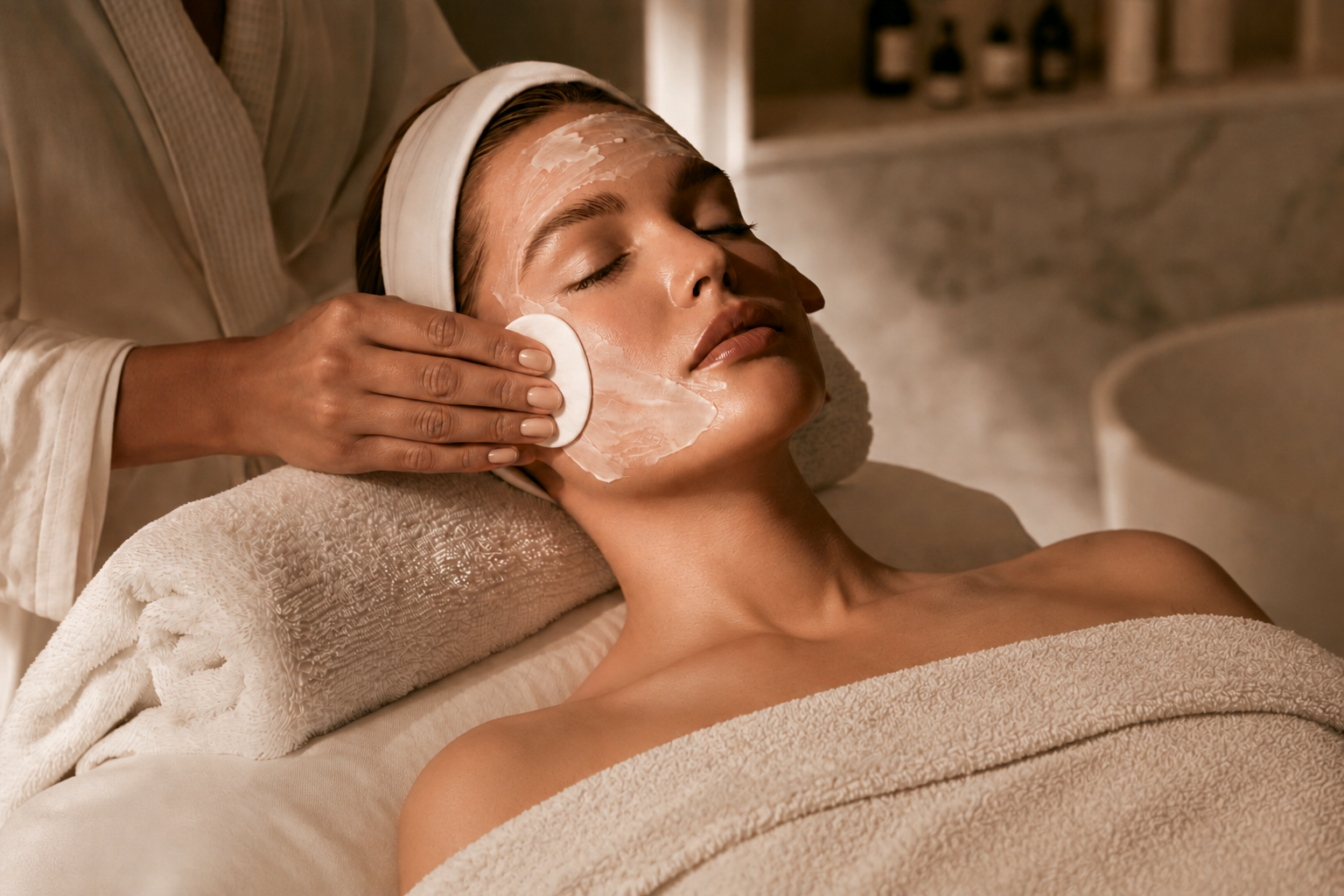
In facial treatments, be deliberate about sensory choreography. When the treatment includes potentially aversive sensations (peels, extractions, energy devices), keep the lead-up calm and predictable: explain the next sensation in plain terms, keep your timing consistent, avoid sudden cold wipes, and use bridge touch that is slow and steady. The CT-touch literature does not give you a “magic stroke”, but it does support the basic clinical intuition that gentle, consistent touch is processed differently from brisk, task-only contact.
For device-led clinics, pay attention to what the client sees during and after. Immediate post-treatment erythema or swelling can dominate the brain’s first valuation pass, which then colours memory. Build the session so the last thing the client experiences is competence and comfort: barrier-supporting finish, neutral lighting for the first mirror check, and clear aftercare framing that anticipates the next 72 hours without drama.





Once tights come back into circulation and the holiday suitcase is put away, the waxing appointment that seemed essential in June can start to look easy to postpone. Taking a break is entirely a matter of preference, but anyone who enjoys the results of regular waxing may find that their first appointment back in spring feels different from the ones they remember.