
How To Utilise the Era of Subscriptions in Your Clinic to Generate Profit
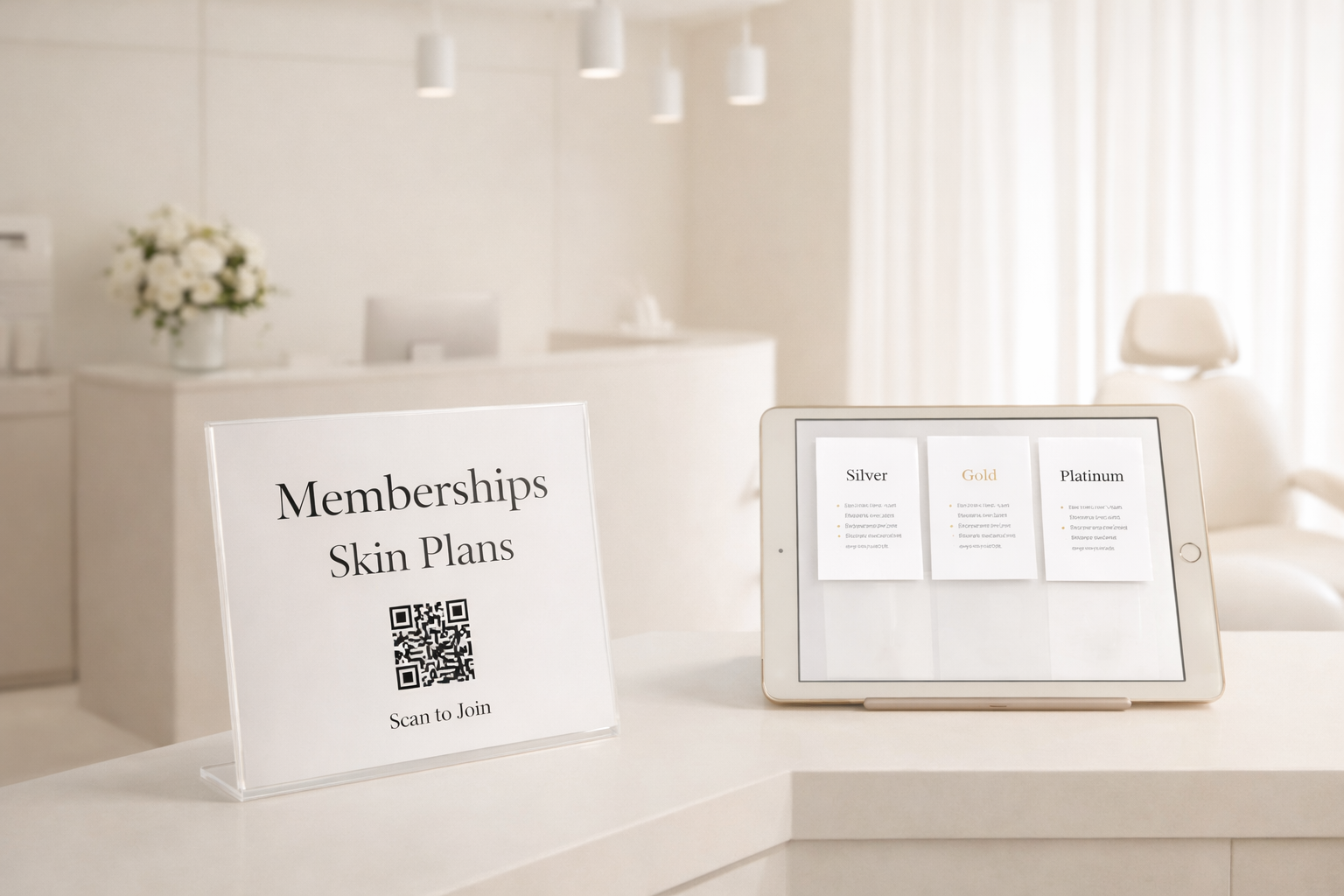
Walk into most clinic receptions on a Tuesday at 2pm and you’ll often spot treatment rooms sitting idle, payroll and rent ticking over, and a bookings diary that looks strong for the next fortnight but hazy beyond that. Subscriptions are one of the cleanest ways to turn that uncertainty into something you can plan around, because they convert episodic, promotion-driven demand into recurring revenue tied to long-term care habits.
Why subscriptions change the unit economics of a clinic
A well-structured membership does three profitable things at once.
First, it reduces volatility. Predictable monthly income supports staffing, stock management, and room utilisation without relying on constant discounting. Second, it lifts retention. When someone pays monthly, they are more likely to default to your clinic as their “home” provider. Third, it increases lifetime value through frequency, add-ons, and retail. A client who comes in regularly is more likely to accept a progressive plan, pre-book, and top-up with adjunct treatments.
As Nick Vaus, Co-founder and Director at brand elevation company Free The Birds puts it, “The rise of subscriptions in clinics and salons is a brand positioning shift which comes from a want for a more nurturing approach with the current economic climate. For patients it’s a move away from “we sell appointments” toward “we manage ongoing care” and that distinction is everything. Traditionally, most clinics and salons operate like retail: each visit is a transaction. The brand shows up when the customer needs something, competes on price or promotion, and then disappears until the next booking. That creates fragile relationships and constant reacquisition costs. You’re always marketing for the next sale.
A subscription model changes the role of the brand entirely. It reframes the business from a service provider to a partner. From episodic to continuous. From reactive to proactive. That’s a fundamentally stronger brand posture.”
You can see early proof points in the UK aesthetics market already. Since its soft launch in November, the Thérapie Clinic Anti-Wrinkle Injection Subscription has demonstrated strong early success, with 32% of all anti-wrinkle clients opting into the subscription model. Growth has been evident nationwide, with London clinics recording an 18% increase in new anti-wrinkle clients, alongside accelerated uptake across regional locations, reinforcing that demand for subscription-based injectables extends well beyond major urban centres.
The psychology: why people subscribe, then underuse
Subscriptions work because they align with real consumer behaviour, including behaviour that is not perfectly rational. We are undoubtedly in an era of subscriptions, and “the popularity of subscriptions reflects a broader cultural change. Consumers are already trained by fitness, streaming, and wellness brands to think in memberships. They expect continuity and convenience. Clinics and salons that adopt subscriptions are simply aligning their business model with how modern relationships with brands actually work” adds Nick.
A sizeable portion of consumers pay for subscriptions they do not fully use. A YouGov study found that more than half of subscribers were paying for subscriptions they did not use, with 17% not using one of their current subscriptions in the previous six months. Citizens Advice has also highlighted the scale of unused or accidental subscriptions in the UK, including research showing millions of consumers unintentionally sign up, and hundreds of millions of pounds are wasted annually.
Why does that matter commercially? Because breakage, members paying but not redeeming their full entitlement, protects margin and capacity. In clinics, the ethical version of this is not to create friction to stop bookings, but to design benefits that remain valuable even when clients miss a month: priority booking, a rolling credit, complimentary skin reviews, or product perks.
Behavioural economics also explains the inertia. People disproportionately stick with the default option, even when switching is objectively better. Combine that with friction costs, plus loss aversion, and cancellations drop further. There is a second layer that clinics can use responsibly: identity and aspiration. People keep gym memberships because they want to be the kind of person who goes. In beauty and aesthetics, the equivalent is the kind of person who maintains their skin.
Subscription packages that are viable in facial and aesthetics
The strongest clinic subscriptions sell maintenance, not a one-off result. Below are models that tend to work commercially.
1) Facial maintenance membership (monthly treatment included)
A set monthly fee includes one core facial (for example, hydrafacial-style, enzyme-based, barrier-focused, or deep-cleanse), plus a structured skin review cadence. Profit comes from increased frequency and predictable room utilisation, with optional paid upgrades (peels, LED, lymphatic, dermaplaning).
2) Skin credit membership (flexible bank of value)
Members pay a fixed amount monthly and receive the same value, or slightly higher value, in credits. Credits can be redeemed across a defined menu. This reduces the “I lost my facial this month” objection and lowers churn because value accumulates.
3) Peel or microneedling course club (quarterly cadence)
Rather than promising monthly clinical treatments, structure programmes around realistic intervals: quarterly peels, seasonal collagen cycles, or three-to-four sessions annually. This fits physiology and avoids over-servicing.
4) LED and device-based add-on subscription (high margin, high repeatability)
LED, radiofrequency maintenance, gentle laser rejuvenation, and similar modalities can be packaged as boost sessions with strong perceived value and relatively low consumable costs.
5) Anti-wrinkle maintenance plan (three times per year, paid monthly)
Anti-wrinkle treatments lend themselves to a subscription because clients already think in three-to-four month cycles. A monthly fee paired with a defined number of treatment visits per year can be positioned around medical governance and continuity of prescriber, which reinforces trust rather than discounting.
Adoreal President Johan Andersson makes the case that subscriptions match modern consumer expectations and can move the relationship into a longer-term trust cycle: “Clinics and salons launching subscription programmes are becoming increasingly more popular. Consumers are used to having the option to subscribe to everything from media entertainment to groceries, so it makes sense that patients would prefer to opt for a subscription programme for their clinic or salon, too. Subscriptions offer convenience, predictability and value for customers, and for the clinics and salons, subscription models can really help with strategy to elevate your brand. It is a great way for a clinic to shift the patient relationship from a shorter to ongoing relationship, as well as building trust between the patient and clinic. This can result in a more trustworthy experience for the patient, brand loyalty and predictable revenue for the clinic.
From a brand perspective, subscriptions create commitment on both sides, so it feels mutually beneficial for both the patient and the clinic. The client feels like a member, not just a customer. It can also bring forth a feeling of exclusivity, which feels more special and can build better, longer-lasting relationships with customers. This can also help with strategy forecasting for the brand, as it is easier to gauge something that is ongoing with more predictable revenue rather than one-off appointments. When structured thoughtfully and done correctly with both the consumer and brand in mind, subscription models can elevate the clinic from a service provider to an essential part of the subscriber’s lifestyle.”
Example A: simple revenue comparison (subscription vs ad hoc)
Assume two clients who like the same facial.
Client 1: subscription
They pay £50 per month for one facial monthly. Annual revenue is 12 × £50 = £600 per year.
Client 2: ad hoc
They book a £100 facial once every three months. Annual revenue is 4 × £100 = £400 per year.
Even before add-ons, the subscription client is worth £200 more per year. The clinical upside is that you see them regularly enough to deliver better outcomes and adjust the plan, which further supports retention.
The operational caveat is capacity. If your subscription entitles clients to a monthly treatment, you must be confident you can deliver that volume. Many clinics handle this by limiting the included treatment to a core menu, offering upgrades as paid add-ons, and capping membership numbers per location based on rooms and therapist hours.
Example B: diary utilisation and breakage in a realistic clinic scenario
Imagine 100 members on a £60 per month plan.
Monthly recurring revenue is 100 × £60 = £6,000 per month, or £72,000 per year.
Now assume only 70% redeem their included treatment in a given month. You deliver 70 treatments, not 100. The clinic still receives £6,000, but the cost of delivery is tied to 70 appointments, and you have the remaining capacity for higher-ticket services, new clients, or paid upgrades. That is where subscriptions can lift profitability without forcing discounting.
When implementing a subscription, in order to maintain client trust you have to ensure you are not undercharging for your best clients. Subscriptions often fail because clinics price them like a marketing promotion rather than a capacity product.
A practical pricing discipline is to start with three numbers:
Your target utilisation (how many appointment slots you can reliably ringfence for members)
Your variable cost per treatment (therapist time, consumables, room turnover, medical time where relevant)
Your expected redemption rate (do not assume 100%)
From there, decide whether your membership is designed to be a best value programme (high redemption expected, margin supported via add-ons and retail), or a convenience and access programme (moderate redemption expected, strong margin, stronger perks).
What to include beyond treatments, so the membership still feels valuable
Many cancellations happen when clients feel they are paying for nothing during busy months. Non-treatment benefits reduce that perception while costing you very little.
Common high-value, low-cost benefits include priority booking windows, members-only late appointments once a month, complimentary skin scans or progress photography, a birthday add-on, a quarterly review with a senior therapist, and structured product incentives tied to compliance (for example, a member-only price on a routine bundle). This also links to consumer conditioning. UK consumers are deeply trained in subscriptions, and beauty and aesthetics sits naturally inside that mental model, as long as the membership feels like a routine and a service design, not a trap.
Considering the Regulatory Concerns
With subscriptions being a hot topic within government, clinics should assume that hard-to-cancel memberships and unclear auto-renewals will become reputationally and commercially risky. For aesthetics specifically, clinics must ensure the subscription does not incentivise inappropriate frequency, that consultations remain meaningful, and that medical treatments stay under the right governance. Positioning subscriptions around medical oversight, licensed products, and continuity of injector can reinforce trust and protect brand equity.
Subscriptions work in clinics when they do two jobs simultaneously: they stabilise revenue and they formalise a care pathway that clients understand as maintenance. The profit is not only the monthly fee. It is fewer empty rooms, less reliance on discounting, lower reacquisition costs, and higher lifetime value through a longer relationship.
Start by building one membership that sells a core monthly facial routine, and one that sells flexible credit for clients who want optionality. Cap membership numbers, track redemption, and make upgrades effortless.









Their precise finish and promises of lasting wear have made Ukrainian and Russian manicures objects of fascination. Understanding the appeal starts with separating the treatment names from the techniques, and knowing where meticulous preparation should stop.