
Why "No Makeup" Makeup is Notoriously So Difficult to Get Right
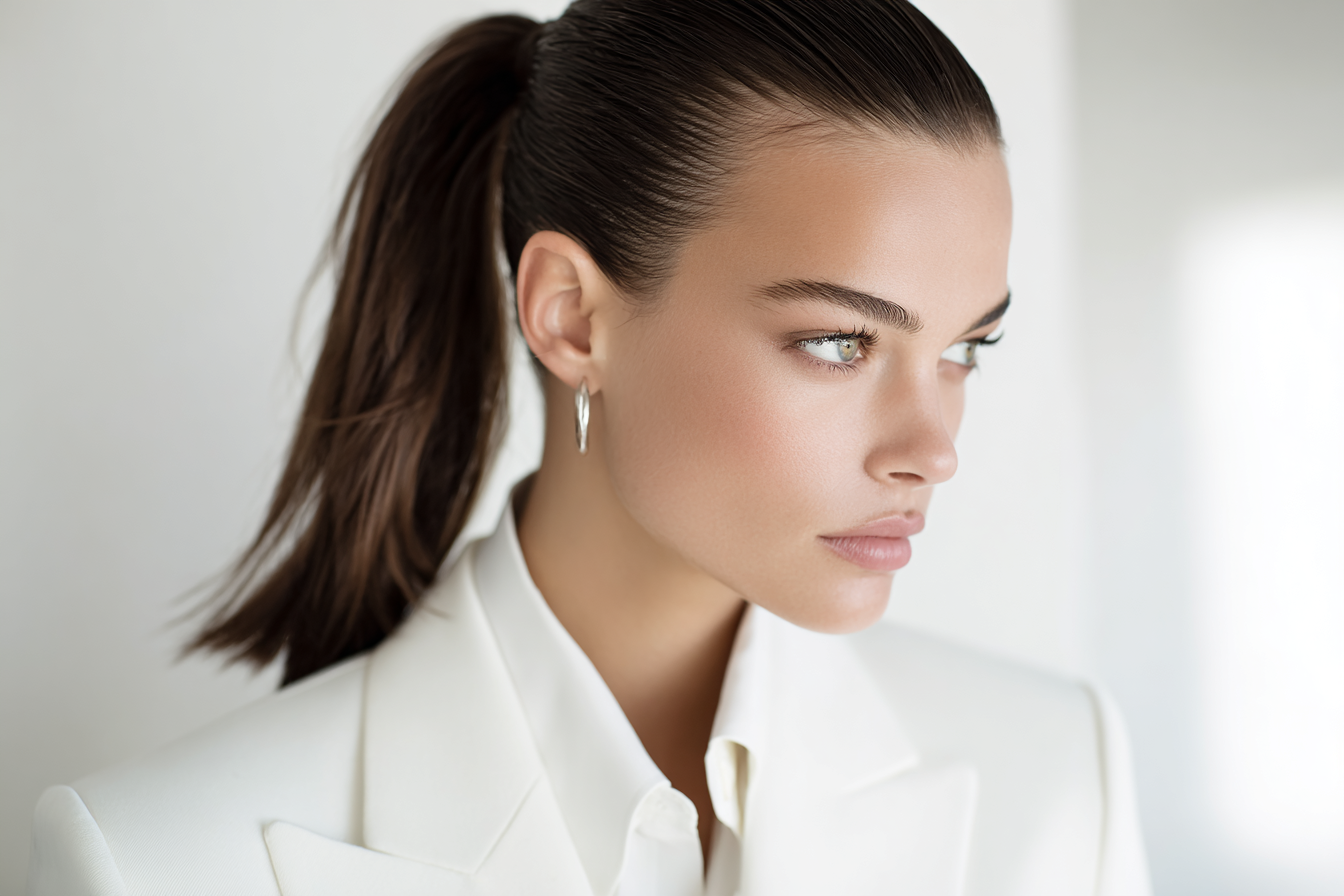
No-makeup makeup has always been a bit of a con. It sells effortlessness while demanding control. The irony feels sharper in 2026, as bolder colour, blurrier edges and a general swing back to statement makeup keeps gathering pace. Yet the “clean girl” and no-makeup codes refuse to disappear, because they have become more than a look. They are a shorthand for polish, health, youth, money, time, and good lighting.
That’s the first reason the style is so notoriously difficult to get right. It is meant to read as “nothing happened here”, but everyone is looking for proof.
Why it stays popular even when maximalism is louder
No-makeup makeup sits at the intersection of social media intimacy and real-world practicality, while cameras move ever closer. Beauty content is now built on tight crops, natural light, quick cuts, and a kind of forensic scrutiny that would have made early YouTube tutorials feel soft-focus by comparison.
Add to that the cultural shift that made skincare routines part of identity, and the clean girl aesthetic became a visual language of “I take care of myself”, even when it is quietly product-heavy. Trend analysis has repeatedly linked clean girl styling to the older no-makeup makeup idea, essentially a modern rebrand of the same promise: enhanced features, minimal obvious cosmetics.
For working makeup artists, this endurance matters because clients are requesting it across categories that used to be more forgiving. Corporate headshots, weddings, on-camera panels, clinic founders filming “day in the life”, bridal that must survive tears, and editorial beauty that still wants skin texture. The look travels well across ages, but the technique does not.
The less you can see, the more everything shows
The no-makeup look removes your favourite hiding places. Full glam lets you build a new architecture: contour can re-sculpt, liner can redraw, powder can erase. No-makeup makeup takes those away, and leaves you with micro-adjustments. Slightly lifted, slightly warmed, slightly evened. That “slightly” is where the skill lives - a you that’s better and enhanced, but at the end of the day the makeup look lets you retain your futures.
As professional makeup artist, Sarah Jane Froom puts it: “The no make up make up look can be harder to achieve than full make up because it’s all about subtlety. It’s all in the skin preparation, light layers, and careful placement. The artistry comes from using sheer textures, applying only where the face naturally needs it, and blending until nothing looks obvious. I tend to half close my eyes when working with models or clients that require this look to spot imperfections that really show through. Rather than product where we think we need it. Knowing when to stop is just as important as knowing what to add.”
There’s a craft point hidden in that half-closed-eye detail: when you reduce visual information, you see the imbalance, not the product. No-makeup makeup is less about coverage and more about distribution.
Skin prep is the base, not the step before it
If the complexion has to survive close-up and daylight, the skin underneath can’t be treated as an afterthought: you are building a surface that will accept minimal pigment and still look even.
A strong prep routine tends to follow three principles:
1) Calm the skin before you brighten it. Redness, dehydration and flaking will read louder once you refuse to blanket the face. If there’s reactive redness, a targeted corrector or tone-adjusting base can do more than piling on concealer.
2) Match finish to real skin behaviour. “Glowy” has become a default instruction, but glow on an oily T-zone reads as slip by midday. Conversely, over-mattifying skin prep forces you to add more pigment later, and that’s when the look turns “makeup-y”.
3) Give products time to settle. No-makeup makeup fails when layers sit on top of one another. The most reliable finish often comes from fewer layers with more patience.
The industry has repeatedly emphasised skin prep as non-negotiable for the look. Texture, grip, and slip decide whether your minimal base looks like skin, or like product clinging to skin.
Common errors that give the game away
The classic mistakes are rarely dramatic. Froom calls it out with the precision of someone who has seen it happen in real time: “Easy mistakes are using too much base, covering the whole face instead of spot concealing, or choosing tones that don’t match the skin. Brows are often overfilled, blush is placed too heavily, and lashes can look too done. The look works best when you enhance what’s already there and let for skin to show through.”
That line about tone matching deserves extra attention in 2026, because undertone errors are more visible when coverage is sheer. A slightly wrong shade in full coverage can be “corrected” with bronzer and powder. A slightly wrong shade in a skin tint looks like a film.
The other common giveaway is uniformity. Real skin is not evenly perfected. When everything is the same finish, the same opacity, the same level of blur, it comes off as too perfect which is a tale tale sign of heavy makeup.
The two brutal tests: daylight and proximity
The look has to hold up to the mirror and the phone, and those are not the same thing.
Senior Director of Artistry Sara Wren at Milk Makeup explains how formula selection stops being about trend and starts being about behaviour of products that will work for the full 24 hours. Wren’s answer leans into grip, hydration, and strategic coverage: “The blue agave in all of Milk Makeup’s Hydro Grip collection is my go to for complexion cause it keeps everything locked on all day. Whether you need a medium to fuller coverage with the Hydro Grip Gel Tint or are looking for undectatable spot concealing, I love the new Hydro Grip Gel Concealer. It’s full of lots hydrating ingredients like triluronic acid (triple powered hyaluronic acid) and a skin barrier strengthen complex to help moisturize skins barrier. All this means a long wear, hydrated skin like finish.”
The important takeaway for artists is less about the product name and more about the criteria. You want hydration that does not become shine, and wear that does not become a mask.
A professional placement map for believable skin
If you only remember one structural rule, make it this - keep product where you need control, and leave skin where skin is convincing.
Wren’s placement logic is deliberately restrained, “I tend to leave complexion off the nose and the cheeks for the most natural look. Sometimes too much product on the nose can be a dead giveaway for a complexion product because it can turn textured and oily. I love using the natural colors of cheek, allowing it to peek around wherever concealer is placed. I love using 1-2 clicks up of the Hydro Grip Gel Concealer stick for coverage under the eyes, around nostril redness and over any blemishes or darkness.”
This matches a long-running pro approach, keep coverage concentrated in the centre of the face, and resist the urge to paint the perimeter. You want to correct first (if needed), then spot-conceal second, then tint third, but only where the tint improves the read. If the skin already looks good on the cheeks, do not chase symmetry with product. Let the cheek live.
The restraint problem: knowing when to stop
The hardest part is psychological. Clients often ask for “natural” while also requesting the effects of makeup: lifted eyes, blurred pores, even tone, bright under-eyes, defined brows, longer lashes, sculpted cheeks. Achieving those simultaneously requires restraint plus strategy.
Jess Kohn, Education and Events Manager for Laura Mercier, articulates the tension: ““No-makeup” makeup is notoriously difficult to get right - you want it to look as natural as possible, almost as if you are wearing nothing whilst trying to colour correct and control, all whilst enhancing and defining your natural features. It can be hard to restrain from adding extra product that can quickly become too much, adding another step into your routine that you may not actually need, all whilst ensuring product placement is subtle but strategic to create natural micro-adjustments over dramatic changes.”
That phrase “natural micro-adjustments” is the whole job. The client should look better in a way they cannot locate. To do this you’ll need to use makeup that does a lot while looking like it’s done very little - like the Laura Mercier Tinted Blur Balm which blurs the complexion but leaves skin looking uniquely you.
The Facial Features Broken Down
Brows: Overfilling is the fastest way to ruin the illusion. If the brow is too uniform or too sharp, it drags the whole face into “makeup”. A better approach is to build the brow in negative space: keep the front airy, define only where hair already exists, and accept asymmetry that real brows naturally have. A clear or lightly tinted gel often does more than pencil, like the Revitalash Hi Def Brow Gel available in both clear and tinted.
Blush: The modern no-makeup cheek is a flush - a natural, more delicate version of a blush and that is exactly what Glow Recipe Watermelon Glow Niacinamide Dewy Flush was created for. Placement matters more than pigment. If the blush sits too high, too wide, or too opaque it screams editorial - which works on paper but not in real life. Sheer cream formulas applied in thin layers, then softened at the edges, keep it convincing, with the aim to mimic blood flow, not paint.
Lashes: Mascara is often the “too done” moment Froom referenced. One coat, combed through, often beats two coats that clump and nothing is more perfect to achieve a natural lash lift look than the Benefit Cosmetics BADgal Bounce Mascara. Tightlining can work, but only if it disappears into the lash line. If the client wants lift, a very clean curl plus a light tubing mascara can keep definition without thickness.
The difference between glow and grease in the Finish
No-makeup makeup tends to fail at midday. The face warms, sebum rises, and what was “dewy” becomes slick. Oftentimes we try and fix with more powder - but that just creates a cakey, built up finish.
The key is to set only where shine breaks to maintain the illusion - sides of the nose, centre of the chin, sometimes the forehead. Keep the cheeks more alive. If you must powder, choose ultra-fine textures (like the cult favourite Laura Mercier Translucent Loose Setting Powder) and press lightly, rather than sweeping. Blotting between layers often preserves skin texture better than layering more product.
No-makeup makeup sells youth, health, and ease. It also photographs well when it is done properly, and it survives trends because it functions as a baseline. Even as 2026 leans into more expressive makeup again in every day makekup, it doesn’t look like we’re abandoning the minimal end of the spectrum anytime soon. This is the look clients believe should be simple, and that expectation makes craft visible. When you get it right, nobody praises your blending. They say the client looks amazing. When you miss, the makeup is suddenly the only thing anyone can see. That is why the “nothing” look remains the hardest one to deliver.


Six Senses, Rosewood, Equinox and Nammos are shaping a Saudi coastal destination where longevity programmes, sleep and recovery, Arabian spa rituals and social wellbeing sit within one ambitious masterplan.