
Restylane Contour Gains FDA Approval for Temple Hollowing
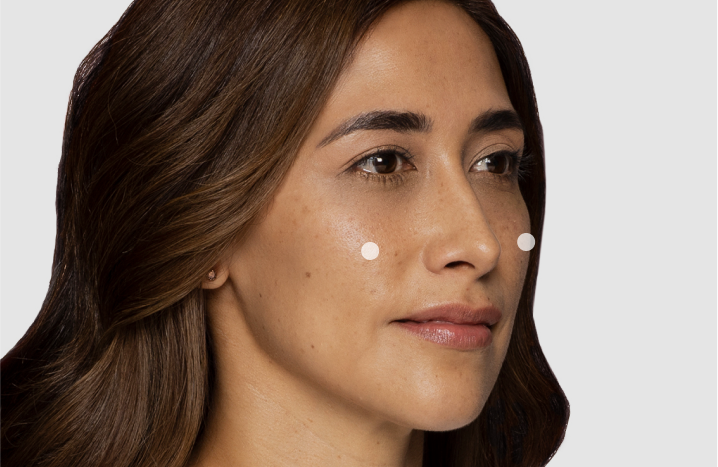
The US Food and Drug Administration has approved Galderma's Restylane Contour for the correction of temple hollowing in patients aged 21 and over, the Swiss dermatology group has announced.
The approval, granted on 23 March, expands the filler's existing US indications, which previously covered cheek augmentation and the correction of midface contour deficiencies. It is the third structural indication for the product and follows a recent FDA approval for Restylane Lyft for chin augmentation, suggesting Galderma is steadily building out the Restylane portfolio across distinct facial zones.
The approval is based on a clinical trial showing significant improvement compared with no treatment at three months, with results lasting up to 18 months. Galderma reports that 91 per cent of patients were considered treatment responders at three months and over 85 per cent at 18 months. Clinical investigators rated 100 per cent of patients as improved from baseline at three months, with 98 per cent at six months and 89 per cent at 18 months. More than 70 per cent of patients felt they looked younger, less tired and more refreshed at 18 months, and over 84 per cent reported satisfaction with their temples over the same period as measured by the FACE-Q patient-reported outcome tool.
The product is administered using a patent-pending dual-layer technique that combines needle and cannula, and is powered by Galderma's OBT/XpresHAn technology.
Galderma has positioned the approval squarely within the post-GLP-1 patient conversation. Bill Andriopoulos, head of global medical affairs at Galderma, said: "As rates of medication-driven weight loss expand, we're seeing greater need for treatments that can address associated facial volume changes."
The framing reflects a category shift that injectors on both sides of the Atlantic have been calling out for some time: rapid weight loss on GLP-1 drugs such as Ozempic, Wegovy and Mounjaro can accelerate facial volume loss, particularly in the temples, midface and jawline, and create demand for filler in patients who would not previously have considered it. According to KFF research cited by Medscape, 18 per cent of US adults have tried a GLP-1 drug to lose weight or to treat diabetes or heart disease, with 12 per cent currently using one.
Dermatologist Mark Nestor, who took part in the trial, said the approval addressed an area of the face that was clinically meaningful but often overlooked. "Despite the temples playing an important role in maintaining a youthful, balanced appearance, they are often overlooked as an aesthetic treatment area," he said. He added that the dual-depth injection flexibility would help him deliver harmonious, natural-looking results across the midface and temples.
The approval applies only in the United States. Restylane Contour is already available in the UK and other markets through Galderma's broader injectables portfolio, but the temple indication will not automatically transfer across regulators. UK practitioners working off-label in the temples are likely to point to the US data as supporting evidence, and the approval is likely to add weight to ongoing conversations about how UK aesthetic clinics are adapting protocols for patients presenting with rapid weight loss.
For Galderma, the indication adds another data point to a portfolio strategy that is methodically claiming structural facial zones one at a time, rather than competing on volume or price. The company also recently launched its Wake Up to Restylane campaign in the US, pitched at patients looking for what it calls effortless, wake-up-ready aesthetic outcomes.




SHA has appointed Fernando Alonso as its new Global Ambassador and Wellness Advisor, aligning the medical wellness group’s approach to longevity with one of the longest and most enduring careers in Formula One.