
What is Cosmeticorexia?
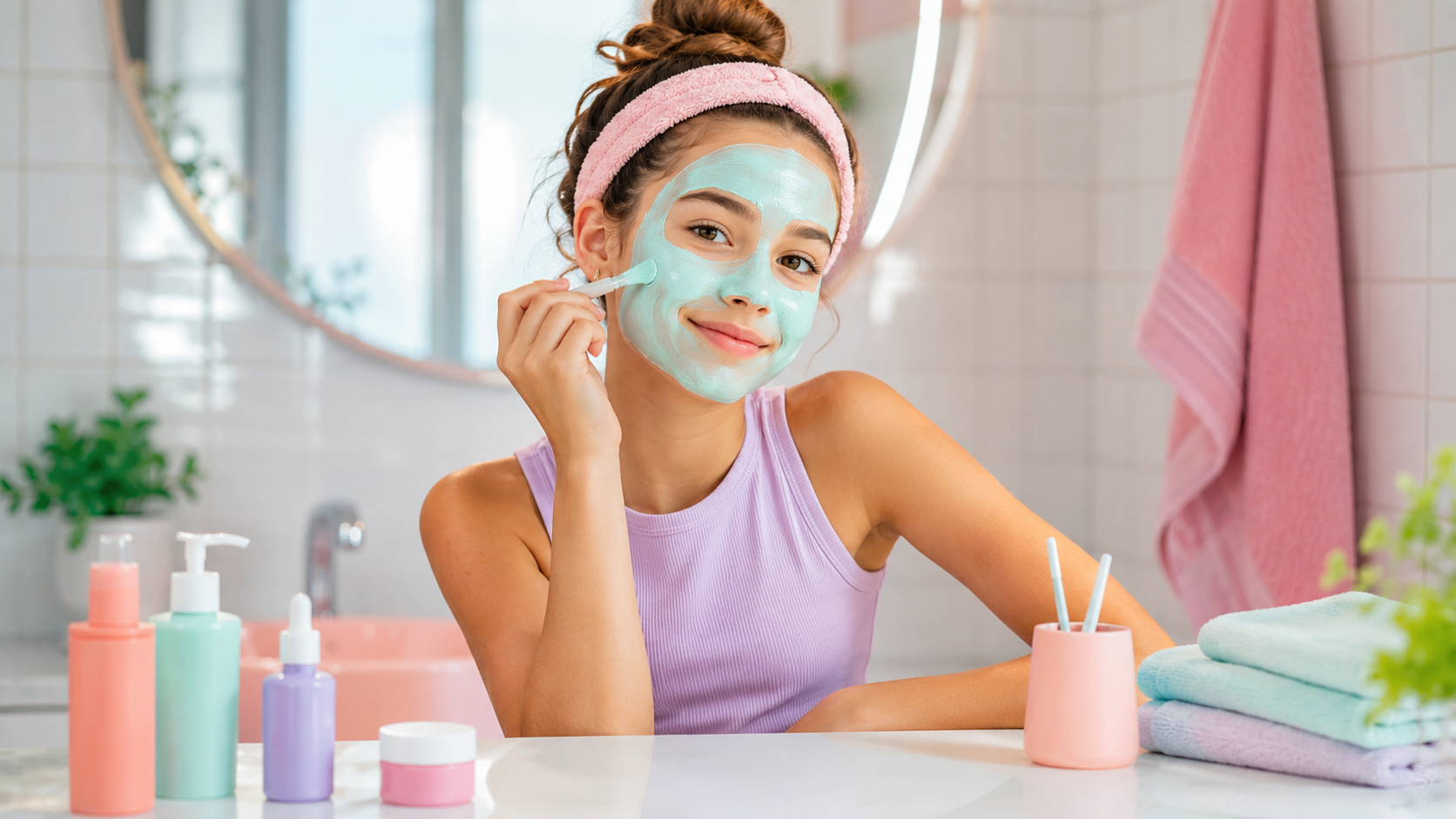
First there were ‘Sephora Kids”, now there’s a new word that has started circulating in dermatology journals; Cosmeticorexia. Cosmeticorexia describes a culturally reinforced, compulsive pursuit of flawless skin through excessive use of active ingredients, cosmetic products, tweakments and procedures. An open-access editorial published this year in Dermatology and Therapy frames it as a preoccupation with perfect skin that can lead to excessive, age-inappropriate or compulsive product use, and it draws a direct line to cosmeceuticals, social media routine culture, influencer marketing and the steady medicalisation of beauty.
A word of warning before we go any further; cosmeticorexia is not a recognised diagnosis. It does not appear in DSM-5-TR or ICD-11. It is a descriptive psychodermatology term, closer to a risk pattern than an established disorder, and the authors who use it are open about the fact that validated criteria, screening tools and proper epidemiological studies do not yet exist. What it overlaps with most closely is body dysmorphic disorder, where a person becomes fixated on perceived flaws that are minor or invisible to others, often accompanied by repetitive checking, grooming, reassurance seeking and attempts to alter appearance.
The distinction that matters is between interest and escalation; a client who enjoys their skincare, follows a routine and likes trying new products is not displaying a disorder. The concern arrives when behaviour tips into compulsion: rising time and money spent, genuine distress when a routine cannot be completed, repeated checking, dependence on products or procedures to manage anxiety, and a refusal to stop despite irritation, financial strain or social withdrawal.
Why the term has surfaced now
The phrase has moved out of academic circles largely because of the so-called Sephora Kids phenomenon. Pre-teens and younger adolescents are buying adult skincare, copying influencer routines, layering products and treating anti-ageing ingredients as ordinary self-care. Children are no longer just wearing lip gloss but instead some are applying retinol, exfoliating acids, vitamin C and multi-step anti-ageing regimes to skin that has no adult ageing needs whatsoever.
Regulators have spoken out about this, with the Italian Competition Authority in March 2026 opening investigations into Sephora Italia, Benefit Cosmetics and LVMH Profumi e Cosmetici Italia over possible unfair commercial practices linked to the premature use of adult cosmetics by children, including under-12s. The authority said the companies may have failed to make clear that certain products were not intended for children, and may have encouraged compulsive purchasing of masks, serums and anti-ageing creams through covert marketing involving young micro-influencers. These remain allegations under investigation.
Cosmetics in numbers
The aesthetic economy in which all of this sits is vast. ISAPS recorded almost 38 million aesthetic procedures performed by plastic surgeons worldwide in 2024, split between 17.4 million surgical and 20.5 million non-surgical treatments, with total procedure volume up by more than 40 per cent since 2020. Botulinum toxin led the non-surgical category at 7.89 million procedures, followed by hyaluronic acid fillers at 6.34 million. Chemical peels reached 820,225 procedures, a rise of 33.3 per cent on the previous year, which is directly relevant to the flawless skin conversation.
A 2024 systematic review and meta-analysis covering 65 studies and 17,107 patients found a pooled BDD prevalence of 18.6 per cent across aesthetic and reconstructive settings. Set against a general population estimate of roughly 0.7 to 2.4 per cent, that means BDD is heavily over-represented in exactly the settings where appearance modification happens. A preliminary dermatology sample referenced in this year's editorial found cosmeticorexic traits in around 9 per cent of 217 patients.
When it comes to youth data; a Pai Skincare survey of 1,500 UK girls aged 9 to 12 found more than one in four using strong actives such as retinol and AHAs, nearly half reporting redness, itching or irritation, and 55 per cent not checking product labels. This is brand-commissioned research rather than independent epidemiology and should be weighed accordingly, but as a market signal it is hard to ignore. Girlguiding found that 54 per cent of girls aged 11 to 21 wished they looked like they do with online filters, that 28 per cent of those aged 11 to 16 would consider cosmetic changes in the next 20 years, rising to 48 per cent among 17 to 21-year-olds. Dove's Self-Esteem Project reported that 52 per cent of girls aged 10 to 17 say toxic beauty advice on social media causes low self-esteem, and that 90 per cent follow at least one account that makes them feel less beautiful.
The psychological and dermatological cost
Cosmeticorexia overlaps with several recognised patterns; there is the body dysmorphic element, where distress centres on perceived skin defects. There is obsessive-compulsive style behaviour, where routines become rigid and difficult to resist. And there is social comparison stress, where filtered faces, glass skin and endless before-and-after content make normal pores, texture, ageing and asymmetry start to feel like defects requiring correction.
The crucial finding for anyone who offers procedures is that treatment does not reliably fix the underlying distress. The International OCD Foundation notes that in one sample of people with BDD who underwent surgical and minimally invasive procedures, 25 per cent saw longer-term improvement in preoccupation with the treated feature, but only 2.3 per cent of procedures led to longer-term improvement in overall BDD symptoms. The treated feature may improve while the disorder remains, often simply migrating to a new perceived flaw.
The dermatological harm is more immediate. Excessive or unsupervised use of actives is linked to erythema, peeling, itch, sensitisation, inflammation, photosensitivity, contact dermatitis, dyschromia and, in some cases, scarring. There is a feedback loop here that practitioners will recognise: irritation appears, anxiety rises, more products are added, and the cycle accelerates.
In England, cosmetic Botox and fillers for under-18s have been unlawful since 1 October 2021, and arranging such treatments for minors is also prohibited outside specific medical circumstances under a doctor's direction. The regulatory gap is that skincare actives are far easier to buy than injectables, which is precisely the territory the Italian investigation is probing.
For medically trained aesthetic practitioners, the practical issue is screening - BDD and cosmeticorexic patterns often present as high engagement, high spend and high motivation, which can look commercially appealing. Those same features may be the warning signs. A responsible consultation assesses motivation, distress, impairment, previous treatment history, social media influence, time spent checking appearance, and whether expectations are realistic. Extra caution is warranted when a client describes minor or invisible defects in catastrophic terms, has a history of repeated procedures with dissatisfaction, or believes a single treatment will transform their life or relationships.
Brands also need to take into acocunt the exposure which is both reputational and regulatory; marketing that pushes children towards anti-ageing products, presents normal skin as flawed, or uses very young influencers to sell active-led routines is increasingly vulnerable to scrutiny. The safer commercial direction is age-appropriate education, barrier-supportive routines, clear warnings and a deliberate retreat from flawless skin messaging aimed at minors.
Practitioners need to remember to be willing to say no, referring on to dermatology or mental health support where appropriate, documenting concerns, and learning to distinguish between a treatable skin condition, ordinary texture and dysmorphic distress.





One ingredient, two regulatory timetables and shelves full of near-identical bottles. The new TPO rules call for a forensic look at stock, suppliers and lamps, not a panicked exit from gel. On a salon shelf, the change is almost invisible. The same orderly rows of builder gels, bases, top coats and colour remain in place, their labels as polished as ever. Yet a single line in an ingredient list now determines whether a product may enter the Great Britain market, how long existing stock may be supplied and what a salon should replace next. The three letters causing the stir are TPO. Online, the story has already been compressed into the sort of headline that travels quickly and explains very little: gel has been banned; every bottle must be binned; TPO and HEMA are the same problem but none of those statements are accurate.