
BCAM urges patients to keep an ‘aesthetic passport’ to track treatments
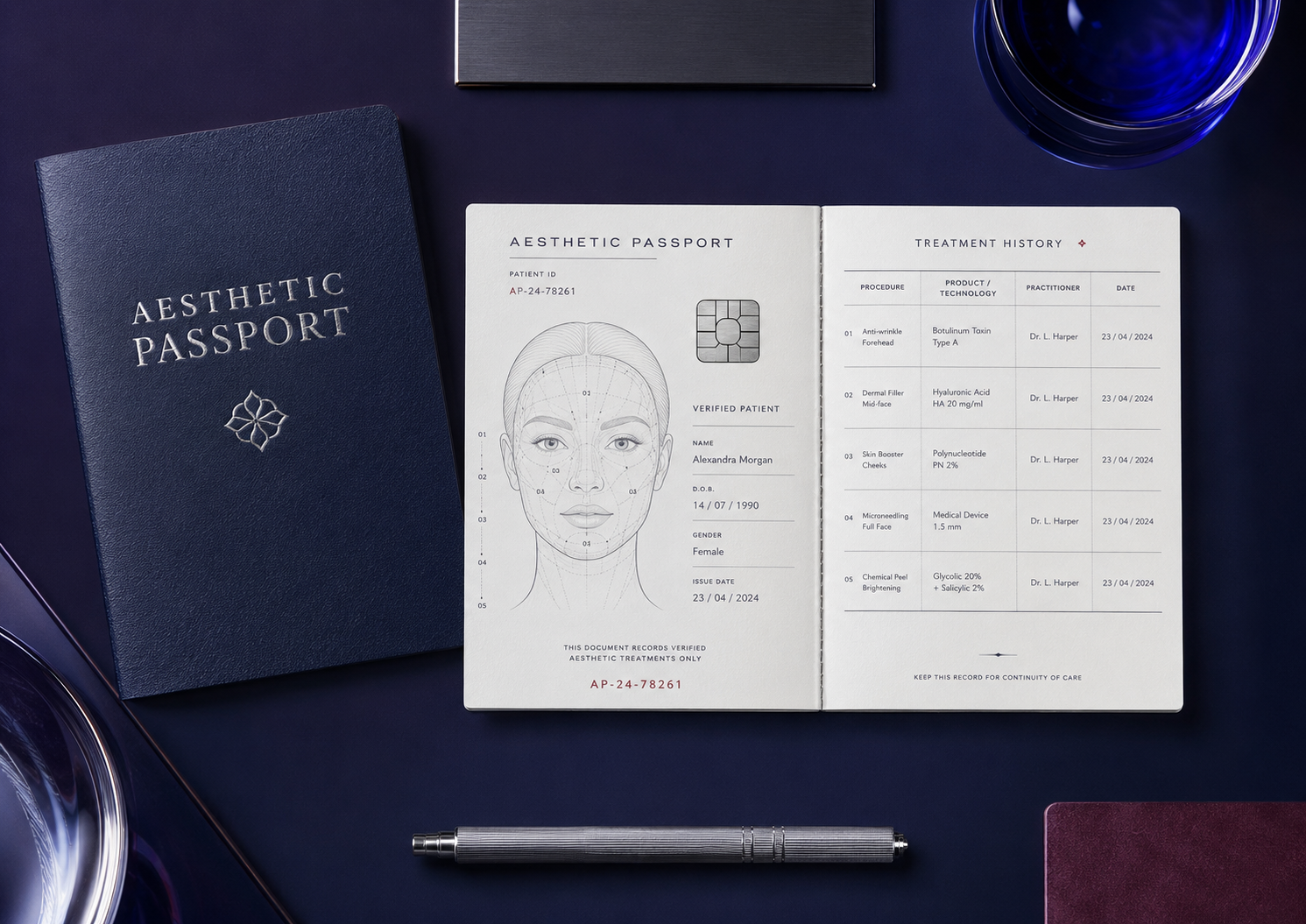
The British College of Aesthetic Medicine (BCAM) is urging patients to create an “aesthetic passport” – a permanent treatment history recording exactly what procedures they have undergone, what products or technologies were used and who carried them out. The guidance forms the latest development in BCAM’s Vet It Before You Get It public-safety campaign and is intended to address a significant gap in aesthetic medicine: patients frequently undergo repeated procedures over many years without maintaining an accessible record of their treatment history.
Patients are being encouraged to document what has been injected, product and batch information, technologies or devices used, the date of treatment and details of the clinic and practitioner. The information can be kept independently or through emerging digital platforms designed specifically for aesthetic treatment records, including Tweak and Aesthetic Passport.
Aesthetic patients can accumulate increasingly complex treatment histories. Someone may have botulinum toxin several times a year, dermal filler in different facial areas, energy-based treatments, skin boosters, biostimulators and other regenerative procedures – sometimes delivered by several practitioners or clinics over many years. Yet treatment information is typically held within the medical records of the individual clinic that performed the procedure rather than in one patient-controlled record. That can become particularly important when a patient changes practitioner, cannot remember which product was previously used or needs assessment following an adverse reaction or complication.
BCAM president Dr Sophie Shotter said:
“People are increasingly knowledgeable about aesthetic treatments, but there is still a major gap when it comes to knowing and recording exactly what they have had done. If something is being injected into your face, you should know what it is, who administered it, and be able to access that information in the future.”
BCAM’s existing guidance already advises practitioners to document the patient journey, including before and after photography where appropriate, agreed treatments, aftercare and follow-up. The aesthetic passport concept places a corresponding copy of the treatment history in the patient’s hands.
The initiative goes further than simply recording that a patient has had “filler” or “Botox”. For injectable treatments, the precise product can be clinically relevant. BCAM’s Vet It Before You Get It guidance already encourages patients to ask which filler brand and model will be used, whether it carries the appropriate conformity marking, and to inspect product packaging. Packaging should carry identifiable batch numbers and expiry dates, with the details on the box, syringe and accompanying documentation matching.
Keeping those details creates greater product traceability after the appointment. Aesthetic Passport, one of the digital services highlighted alongside the initiative, allows participating clinics to record details including product, dose, batch, treatment site and date. Patients approve the information before it enters their record and can subsequently provide access to another practitioner. The platform also allows patients to photograph product labels, retaining the brand and batch information so they can identify whether a product they received is subsequently subject to a recall. The service is currently preparing an iPhone launch later in 2026, with patient records designed to remain separate from individual clinic systems.
The aesthetic passport recommendation builds on a much wider patient-safety campaign launched by BCAM in October 2025 following the publication of its Annual Clinical Review. Data gathered from 383 doctors and dentists practising aesthetic medicine revealed that BCAM members had managed 3,002 complications arising from procedures performed elsewhere during 2024. Some 67% of reported complications were associated with other practitioners and 87% involved dermal fillers. The data included 1,239 filler complications and 668 toxin complications linked to treatments carried out by beauticians. Those findings led to the creation of Vet It Before You Get It, which gives consumers a pre-consultation framework for assessing a clinic or practitioner before proceeding with treatment.
At its centre is a free safety questionnaire covering six areas: professional credentials, clinical supervision, insurance, product safety, emergency protocols and clinic governance. Patients are encouraged to check whether their practitioner is appropriately qualified and registered, whether adequate insurance is in place, what products will be used and how the clinic would manage a complication or out-of-hours emergency. BCAM advises patients not to proceed when those questions cannot be answered clearly or supported with appropriate evidence.









Superdrug has launched online appointment booking for its Beauty Studios, starting with 72 stores and expanding to more than 200 locations by the end of October 2026.