The Real Science Behind LED Masks and What Practitioners Need to Know
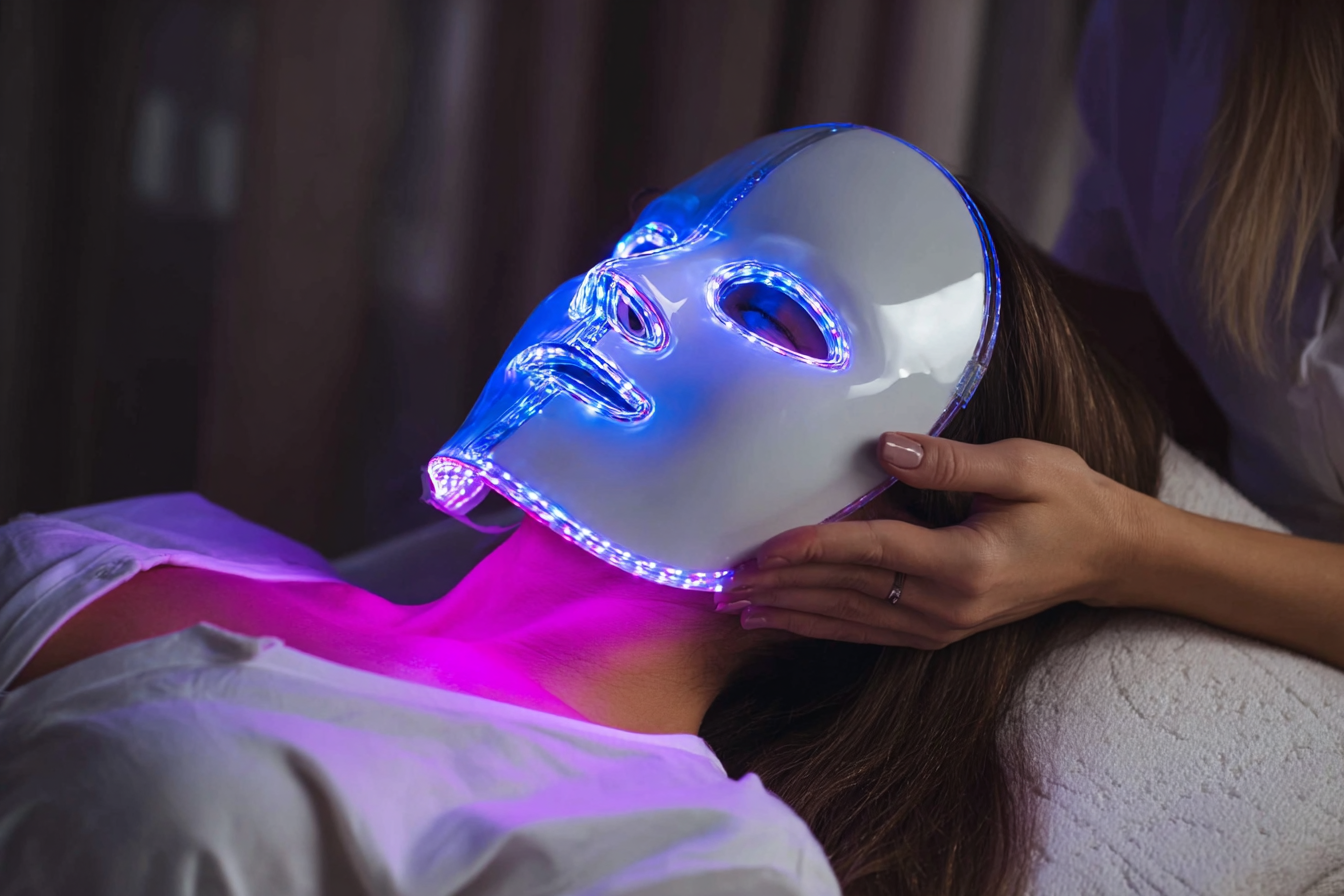
When the Advertising Standards Authority (ASA) announced that it had banned a series of LED face mask adverts over acne and rosacea claims, it sent a clear signal to the beauty sector. Four brands were found in breach of the CAP Code after social media and website ads claimed their masks could “treat acne”, “heal rosacea” and “kill acne causing bacteria”, often backed with before and after images. Both acne and rosacea are classified as medical conditions in UK law, which means any device claiming to treat them must be registered with the MHRA as a medical device and supported by robust clinical data.
Read More
The Big Bold Entrance from Aroma-Zone into UK with a Two-Floor Westfield Debut
London’s beauty retail rarely sees a first-time entrant stake such a confident claim. Aroma-Zone has opened a two-storey flagship at Westfield White City, designed to showcase an expert-led, affordable, and inclusive model that has reshaped the French market. We sat down with CEO Sabrina Herlory Rouget on the night of the grand opening to explore why London, why now, and how the brand plans to translate its community-driven success across the Channel.
Read More
Investigation Reveals Illegal Human-Derived Exosomes Used in Clinics
A 5 News undercover investigation has found beauty clinics across the UK offering microneedling facials that use exosomes harvested from human tissue, despite UK rules that prohibit human-derived material in cosmetics. In the report, some clinics acknowledged using products sourced from umbilical cord blood or liposuction fat.
Read More
What Does the Dua Lipa x Augustine Bader Partnership Mean for the Future of Celebrity Brands?
When Dua Lipa unveiled DUA, a three-piece skincare line created with Augustinus Bader, industry watchers clocked more than another celebrity drop. It looks like a new blueprint for how fame, science and price architecture can co-exist without cannibalising the parent brand or exhausting consumers who are weary of celebrity-fronted launches. The range launched on 4 November 2025 with a cleanser, a glow serum and a moisturiser priced roughly $40 to $85, well below Augustinus Bader’s core line. The line uses a proprietary complex called TFC5, positioned as a gentler sibling to AB’s hallmark TFC8.
Read More
What Skincare Do Children Actually Need?
Shay Mitchell’s launch of Rini, a kids’ skincare line for children as young as 3, has intensified a debate already rumbling through clinics, schools and social feeds: should children have skincare routines at all, and if so, what do they need. The short answer from dermatology literature and UK clinical guidance is simple. Healthy children need very little beyond gentle cleansing, moisturising when skin is dry, and rigorous sun protection. Everything else risks irritating an evolving skin barrier or normalising cosmetic overuse at an early age. The longer answer is that needs change with biology, not marketing cycles, and that biology is clear.
Read More
How UK Spas Can Validate Heat-Therapy Outcomes with Simple Metrics Clients Understand
Heat is having a moment in British wellness. Infrared cabins, classic Finnish saunas and hot plunge pools are moving from “nice to have” to “anchor treatment,” backed by an evidence base that is no longer just folklore from Nordic countries. For operators in the UK, the challenge is not whether heat works but how to show it works for your guests in ways that are safe, comprehensible and compliant with advertising rules.
Read More
Can You Use Lemon Essential Oil On the Skin?
Lemon essential oil is popular with formulators because it smells clean, cuts through oil, and carries a reputation for brightening. Its activity comes largely from volatile monoterpenes such as limonene, β-pinene and γ-terpinene, with smaller amounts of citral and related compounds. In vitro and ex vivo work shows antioxidant capacity and broad antimicrobial effects against several bacteria and fungi, which helps explain its use in products aimed at oily or blemish-prone skin and as a natural preservative adjunct. That said, most efficacy data sit at bench scale rather than in robust clinical trials, so positioning should be measured.
Read More
How Dental Alignment and Smile Contouring Can Reduce Filler Needs and Improve Balance
A smarter face plan starts behind the lips. We explore how tooth position, gum contour and bite shape lip support, soften folds and rebalance the lower third, often reducing the need for injectables. With clear visuals, case planning and Dr Yasmin’s insight, it’s key to understand when dentistry should come first and how to sequence the rest.
Read More
The Best In-Clinic Treatments for Hyperpigmentation in Skin of Colour
Smita Ahluwalia, award-winning facialist and founder of Smita London, sets out a clear, science-led roadmap for treating hyperpigmentation in skin of colour. Drawing on three decades of practice and her South Asian heritage, she explains why melanin-rich skin needs inflammation-aware protocols and careful modality choice. Expect a measured take on The Green Peel, gentle mandelic and lactic peels, microneedling with pigment modulators, LED for recovery, and NanoFractional RF for texture and tone, with selective use of Nd:YAG where appropriate. The focus is long-term clarity and barrier health supported by daily SPF and targeted home care, with menopause and skin of colour needs front and centre.
Read More
The Treatments That Work 25 Years On
Katie Hughes-Dawkins, veteran clinician turned sales leader and former multi-clinic operator, distils twenty-five years of frontline insight into what truly works. She sets neuromodulators as the reference point, backs Alexandrite and Nd:YAG for lasting hair removal, and positions CO₂ resurfacing as the heavy lifter for texture and scars. Fillers earn a cautious yes in expert hands, while facials, peels and disciplined home care form the base that makes everything else perform. Her message is clear: choose proven platforms, skilled practitioners and a partnership approach for results that last.
Read More
about-face is an Editorial Makeup Artist's Dream
about-face, which has launched at SpaceNK last month, is the rare celebrity brand that earns space in a pro kit. Founded by Halsey, the Grammy-nominated singer and visual artist, the line is built from an artist’s eye and a performer’s grit. The Quadruple threat that is Halsey, (being a singer, songwriter, visual artist/painter and entrepreneur), has been painting her own makeup for the stage, red carpet and cover looks, treating makeup like pigment on canvas and building techniques that survive heat, sweat and long days on set. That discipline runs through the about-face’s textures, payoff and wear.
Read More
Inside the World’s First Wellness Island
Picture a private island where the daily routine skews towards blood panels, cold plunges and chef-led nutrition rather than beach clubs. That is the pitch behind SHA Island, a new project at AlJurf on the UAE’s Sahel Al Emarat coast, midway between Dubai and Abu Dhabi. The destination is being developed with IMKAN Properties and anchored by SHA Wellness Clinic, the Spanish brand known for clinic-level programmes that mix diagnostics with spa, movement and nutrition. Partners are marketing it as the world’s first island community built entirely around longevity and healthy living.
Read More
The Unmissable Advent Beauty Calendars for 2025
The beauty advent calendar has outgrown its novelty. What began as a handful of minis behind cardboard doors is now a December ritual that rivals the best gifting. This year’s boxes bring serious skincare, full size make-up, fragrance wardrobes and spa-at-home treats, wrapped in keepsake designs that earn a place on the dressing table long after the tree is down. Value matters, but so does curation. The standouts mix icons with discovery, build complete routines rather than drawer clutter and favour thoughtful details, from recyclable packaging to refillable formats. Below, the calendars that deserve a spot on your list, each chosen for what makes it different and why it is worth opening every single morning.
Read More
Textured Hair Is Not Niche. It Is the Missed Mainstream
Janet Davies, biochemistry graduate and founder of Ominira Naturals, sets out why textured hair needs science, cultural respect and safer formulations to thrive. Drawing on a decade of research and her own waist-length hair journey, she tackles the industry’s underrepresentation of Black women, explains the biology behind coils and curls, and challenges the false choice between styling and scalp health. She showcases heritage botanicals paired with evidence-led formulation, community education on hormones and gut health, and a retail and media call to action that treats Afro hair as standard, not a side aisle.
Read More
Viral Vivids is the Hair Colour Trend of Autumn / Winter 2025
The internet’s love affair with high impact hair is not slowing down. In the run up to autumn and winter, saturated “Viral Vivids” are everywhere you look, from TikTok transformations to red carpets and the AW25 runways. The mid-year outlook called it early, noting that vibrant reds would not be going anywhere for 2025, whether bold copper or deep cherry, and the prediction has landed in salon chairs across the UK.
Read More
Beautification vs. Correction in Aesthetic Medicine
Dr Jennifer Owens, dentist and MSc Aesthetic Medicine graduate from St Barts and founder of The Glow Clinic in Dublin and Cork, explores the shifting line between beautification and correction in modern aesthetics. She shows how lip enhancement in youth, midface restoration with age, and energy-based skin treatments can all sit on the same spectrum when harmony and facial balance lead the plan. Drawing on real-world cases and the “designed self” concept, she explains why patient perception and mental health matter as much as anatomy. The result is a clear, compassionate guide to treatments that help patients look authentically themselves.
Read More
The Benefits of Chiropractic Care During Pregnancy & Postpartum
Dr Thriya Pillay, founder of Bump and Beyond Chiropractic has her Masters in chiropractic (cum laude). She has 5 years experience in treating mums, babies and everyone in between. Dr Thriya Pillay shares how pregnancy-safe chiropractic can ease back, hip and sciatic pain, support pelvic balance, and encourage optimal baby positioning, with research suggesting shorter labours and fewer interventions. She explains relaxin, alignment of the spine and pelvis, and gentle techniques such as Webster and SOT, then shows how postpartum care restores function, improves posture, and reduces strain in the fourth trimester.
Read More
Is it normal for skin to “purge” after a facial?
You hear it every peak peel season - “Is it normal for my skin to purge after a facial?” The word purge has travelled from social media into clinic language, yet it rarely means the same thing to clients and practitioners. To the client, any post-treatment spots feel like proof of a reaction. To professionals, those early blemishes can reflect predictable biology, poor barrier tolerance, or unrelated acne triggers that happened to coincide with treatment. “Skin purging” is not a formal medical diagnosis. It is a consumer term used to describe a temporary flare of spots after introducing actives that increase epidermal turnover, most famously topical retinoids. Dermatology literature documents early acne flaring with retinoids, although the phenomenon is better framed as irritation and accelerated comedone cycling rather than a discrete disease entity.
Read More
Best New Professional Beauty Treatments in September 2025
Autumn is shaping up to be the season clinics lean into longevity, precision and polish. After years of micro-maintenance, patients are asking for fewer appointments with more durable payoff, favouring treatments that rebuild structure, bank collagen and refine skin quality rather than simply add volume. We’re seeing two tracks rise in tandem: regenerative biostimulatory protocols that improve texture, tone and pore profile over weeks, and meticulously engineered procedures that reposition rather than inflate, delivering definition without the giveaway finish. Devices are getting faster and kinder to skin, pairing high frequency mechanics with intelligent delivery to minimise irritation while driving actives exactly where they need to go. Body care is stepping out of the shadows, with back, scalp and stretch-mark solutions moving from niche to normal, and luxury hospitality filtering into treatment menus so results and experience land on equal footing. In clinic diaries, that translates to glow now, lift that lasts and protocols that layer hydration with repair for the pre-party run-up. This month’s launches reflect that direction of travel, from structure-first rejuvenation to next-wave skin boosters and precision microneedling systems, with spa-grade rituals that feel considered rather than cosmetic. The common thread is subtlety with stamina, and outcomes that read as you on your best day.
Read More
Why Do Prostaglandin Analogs Have a Bad Reputation and is it Deserved?
Prostaglandin analogues sit in a curious place in beauty. They are drug-like molecules that extend the hair follicle’s growth phase and were first noticed by ophthalmologists, not make-up artists. Patients using daily glaucoma drops developed longer, thicker, darker lashes. That observation led to the first licensed lash medicine, bimatoprost 0.03 per cent, which remains the only FDA-approved active with strong controlled data showing meaningful gains in lash length, thickness and darkness within 16 weeks, with mostly mild and transient irritation reported in trials. The appeal for aesthetics is obvious. The controversy is too.
Read More