
Sauna’s next act puts staff training in the spotlight
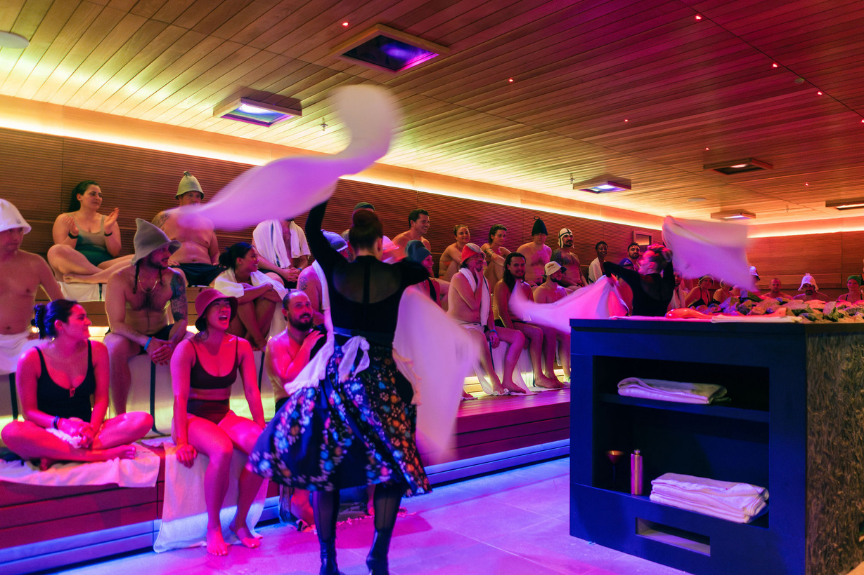
New bathhouse research points to strong interest in guided experiences, while more than half of respondents identify staffing and training as areas prospective owners often underestimate.
Guided rituals and group sauna experiences are emerging as a priority among businesses taking part in a new bathhouse survey, bringing the skills needed to deliver them into focus for spa and wellness operators.
The latest findings from the 2026 Bathhouse & Thermal Wellness Development Benchmark Survey, developed through the Global Wellness Institute’s Hydrothermal and Consulting Best Practices Initiatives, show that 77% of its 47 respondents offer or plan guided thermal programming. Meanwhile, 62% have or plan a large-format or event sauna designed to accommodate group experiences. Alongside those ambitions is a finding with particular relevance for spa managers: 53% of respondents identify staffing and training as something prospective owners often underestimate. Taken together, the responses suggest that the move towards a more actively programmed sauna offer deserves attention in recruitment and operational planning.
Among the 37 respondents already operating, 43% include the combined category “Aufguss / sauna rituals” in their programming. The questionnaire groups the two together, so this cannot be read as a measure of Aufguss adoption alone. Aufguss illustrates the skills involved in delivering a hosted sauna experience. A sauna master introduces water and aromas to heated stones, then uses towel movements to circulate the warm, scented air, often accompanied by music. The experience has a structure and a host, with rest between rounds forming part of the visit.
UK businesses already offer several versions of this approach. Aufguss Sauna Experience runs sessions at London venues including Sweheat Sauna and Old Kent Road Sauna, alongside a four-hour sauna evening with multiple international sauna masters and food and drink. Its programme shows how sauna can be presented as an event with a specific reason to book. A scheduled ritual could give guests a reason to book a particular session or return for a different experience. Whether that translates into additional income would depend on attendance, pricing and the cost of delivery. A programme built around a skilled host requires time for preparation, delivery and cover, as well as training. Managers would also need to consider how scheduled sessions sit alongside general sauna access, particularly where guests have booked a spa day expecting to use the facilities freely.
Training provision offers a practical view of the role. At Wild Spa Wowo in Sussex, Katie Bracher’s Sauna Guide Foundations course includes guest care, Aufguss technique, designing sauna ceremonies and supervised facilitation with feedback. It is a combination of practical technique and the ability to guide a group through an experience.
The survey also records substantial expansion ambitions, with 62% of respondents expecting to operate multiple locations within three years. Those intentions raise a further operational question: how can a business reproduce an experience that depends heavily on the person leading it? For operators developing several sites, consistent training and delivery could become an important part of maintaining the offer.
Sauna and communal thermal wellness operators worldwide can still take part in the survey. The organisers are seeking wider international participation, with confidential responses and early access to findings for participants. Completion takes approximately eight to ten minutes.






New bathhouse research points to strong interest in guided experiences, while more than half of respondents identify staffing and training as areas prospective owners often underestimate.